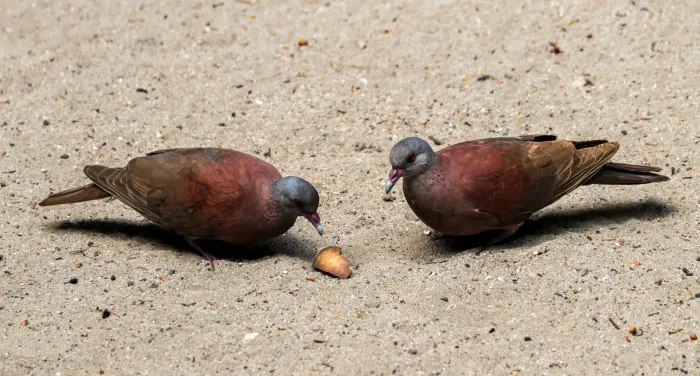
Mauritius Turtle-Dove
Mauritius Turtle-Dove
100
-
Points:
100
Not yet spotted on Fladder
Spotted
The Rodrigues Pigeon (Nesoenas cicur) was an extinct species of pigeon endemic to Rodrigues Island, a Mascarene island in the Indian Ocean. It was closely related to the surviving Pink Pigeon of Mauritius.
Where to spot
Extinct. Historically endemic to Rodrigues Island. Its habitat would have been the native forests and woodlands of the island.
How to spot
Not applicable (extinct). Information about the Rodrigues Pigeon is primarily derived from historical accounts and fossil remains, serving as a reminder of past biodiversity and the consequences of human impact.
When to spot
Extinct. It is believed to have become extinct in the late 18th or early 19th century due to habitat loss and predation by introduced species.
Where to spot
Extinct. Historically endemic to Rodrigues Island. Its habitat would have been the native forests and woodlands of the island.
How to spot
Not applicable (extinct). Information about the Rodrigues Pigeon is primarily derived from historical accounts and fossil remains, serving as a reminder of past biodiversity and the consequences of human impact.
When to spot
Extinct. It is believed to have become extinct in the late 18th or early 19th century due to habitat loss and predation by introduced species.
This pigeon was first described by early explorers and its bones have been found in significant numbers, providing crucial insights into the lost avifauna of the Mascarenes and the impact of human arrival.
Loading...
Spotted
No recently spotted birds
Monthly observations
No observations
Loading...
Nothing spotted yet
Also interesting



Share this page
Or share directly on
