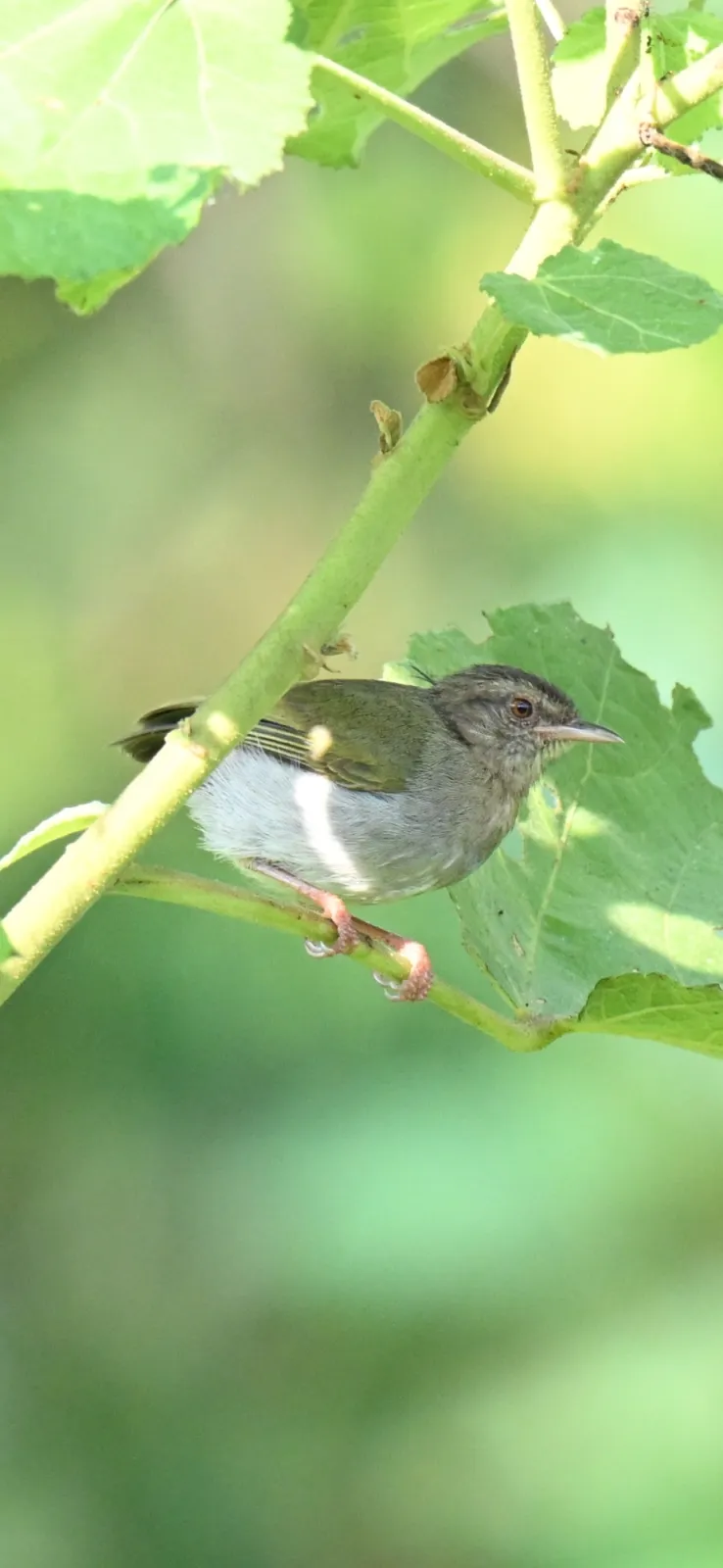
Green Crombec
Green Crombec
100
2 months ago
door
jenny van Dorland
Points:
100

A small, short-tailed warbler with a plump body and an upright posture, characterized by its olive-green upperparts and pale greyish-white underparts. It has a short bill.
Where to spot
Tropical and subtropical moist lowland forests, dense secondary growth, and forest edges across West and Central Africa.
How to spot
Look for its active foraging behavior, often gleaning insects from foliage at various heights. Its distinctive, short, upright tail and small size are key identifiers. Listen for its high-pitched, often repeated calls.
When to spot
Year-round resident. Active throughout the day, though generally more vocal in the mornings. Breeding activity peaks during local rainy seasons.
Where to spot
Tropical and subtropical moist lowland forests, dense secondary growth, and forest edges across West and Central Africa.
How to spot
Look for its active foraging behavior, often gleaning insects from foliage at various heights. Its distinctive, short, upright tail and small size are key identifiers. Listen for its high-pitched, often repeated calls.
When to spot
Year-round resident. Active throughout the day, though generally more vocal in the mornings. Breeding activity peaks during local rainy seasons.
Crombecs are known for their unique nesting habits, often building deep, cup-shaped nests suspended from thin branches, which helps to camouflage them from predators.
Loading...
Spotted
- Recently spotted
- 1 (Seen in the last 3 months)
- Last spotted
- 2 months ago door jenny van Dorland
Monthly observations
1 observation
Loading...


Also interesting




Share this page
Or share directly on
