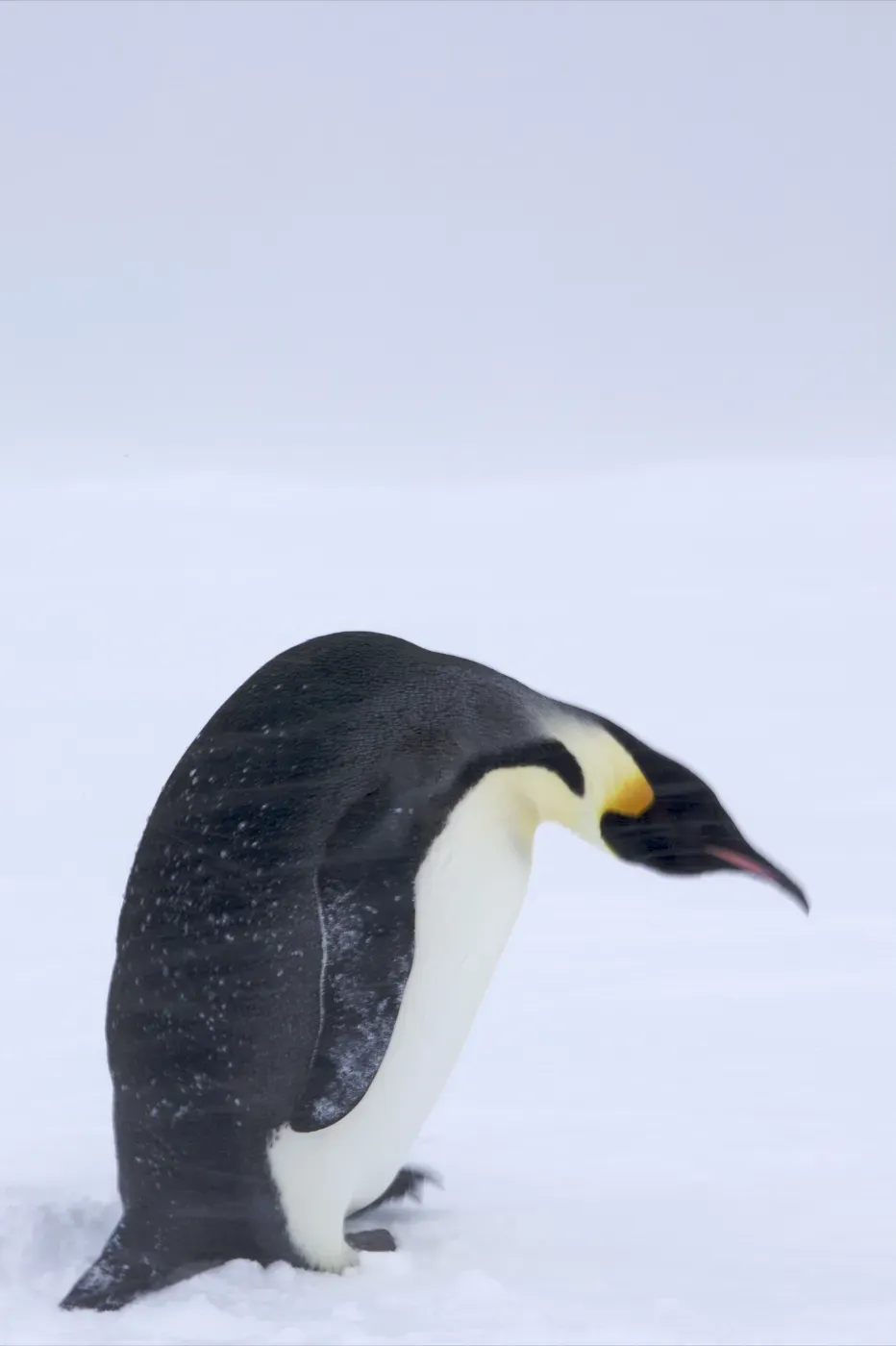
Emperor Penguin
Emperor Penguin
100
-
Points:
100
Not yet spotted on Fladder
Spotted
The Emperor Penguin is the largest and arguably most iconic penguin species, known for its regal stature, black and white plumage, and delicate golden ear patches. It is the only penguin that breeds during the harsh Antarctic winter, enduring extreme cold and darkness to raise its young.
Where to spot
Endemic to Antarctica, breeding on fast ice around the continent and foraging in the surrounding Southern Ocean. Rarely ventures north of the Antarctic Circle.
How to spot
Identify by its immense size, black back, white belly, and the subtle golden patches on its neck and ears. Look for them in large colonies on the sea ice. Observe their distinctive slow, deliberate walk and efficient 'tobogganing' (sliding on their bellies) across the ice. Requires specialized Antarctic expeditions.
When to spot
Year-round resident in Antarctica. Best observed during the austral spring and summer (October-March) when chicks are growing and easier to access for research and observation. Expeditions to remote Antarctic ice shelves are usually required.
Where to spot
Endemic to Antarctica, breeding on fast ice around the continent and foraging in the surrounding Southern Ocean. Rarely ventures north of the Antarctic Circle.
How to spot
Identify by its immense size, black back, white belly, and the subtle golden patches on its neck and ears. Look for them in large colonies on the sea ice. Observe their distinctive slow, deliberate walk and efficient 'tobogganing' (sliding on their bellies) across the ice. Requires specialized Antarctic expeditions.
When to spot
Year-round resident in Antarctica. Best observed during the austral spring and summer (October-March) when chicks are growing and easier to access for research and observation. Expeditions to remote Antarctic ice shelves are usually required.


Credits:
Wikimedia Commons

Credits:
Wikimedia Commons

Credits:
Wikimedia Commons

Credits:
Wikimedia Commons
Emperor Penguin males incubate the single egg on their feet for over two months during the Antarctic winter, enduring temperatures as low as -60°C (-76°F) and harsh blizzards without eating.

Also interesting




Share this page
Or share directly on
