Malleefowl
Malleefowl
100
-
Points:
100
Not yet spotted on Fladder
Spotted
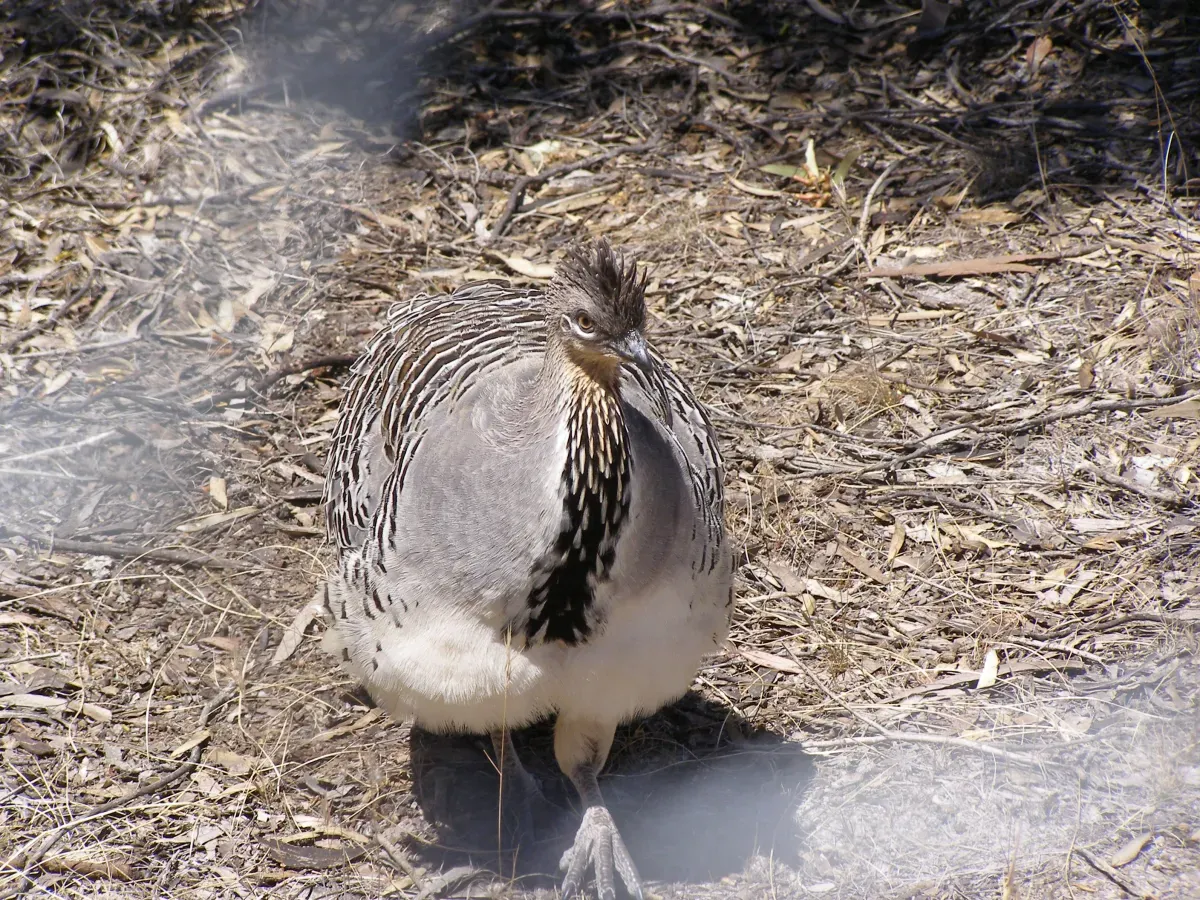
The Malleefowl is a large, ground-dwelling megapode endemic to semi-arid and arid regions of southern Australia. It is renowned for its elaborate mound-nesting behavior and highly cryptic, camouflaged plumage.
Where to spot
Found in mallee and woodland habitats across southern Australia, including parts of Western Australia, South Australia, Victoria, and New South Wales. They prefer areas with deep, sandy soil suitable for mound construction.
How to spot
This shy and incredibly camouflaged bird is difficult to spot as it blends seamlessly with its environment. Look for a large, stout, greyish-brown bird with intricate patterns, moving slowly on the ground. Its presence is often indicated by its large, distinctive incubation mounds, which are easier to locate than the bird itself. Be quiet and patient.
When to spot
Year-round, but mound building and egg-laying activity are most intense from late autumn through spring (typically April-November), when males are most actively maintaining their mounds.
Where to spot
Found in mallee and woodland habitats across southern Australia, including parts of Western Australia, South Australia, Victoria, and New South Wales. They prefer areas with deep, sandy soil suitable for mound construction.
How to spot
This shy and incredibly camouflaged bird is difficult to spot as it blends seamlessly with its environment. Look for a large, stout, greyish-brown bird with intricate patterns, moving slowly on the ground. Its presence is often indicated by its large, distinctive incubation mounds, which are easier to locate than the bird itself. Be quiet and patient.
When to spot
Year-round, but mound building and egg-laying activity are most intense from late autumn through spring (typically April-November), when males are most actively maintaining their mounds.


Credits:
Wikimedia Commons

Credits:
Wikimedia Commons

Credits:
Wikimedia Commons

Credits:
Wikimedia Commons

Credits:
Wikimedia Commons

Credits:
Wikimedia Commons

Credits:
Wikimedia Commons

Credits:
Wikimedia Commons

Credits:
Wikimedia Commons
Malleefowl males build massive incubation mounds, sometimes over 4.5 meters (15 feet) in diameter and 1 meter (3 feet) high. They are extraordinary 'thermostats,' meticulously regulating the mound's temperature for months by adding or removing sand, ensuring a stable environment for their developing eggs.
Loading...
Spotted
No recently spotted birds
Monthly observations
No observations
Loading...
Nothing spotted yet
Also interesting



Share this page
Or share directly on
