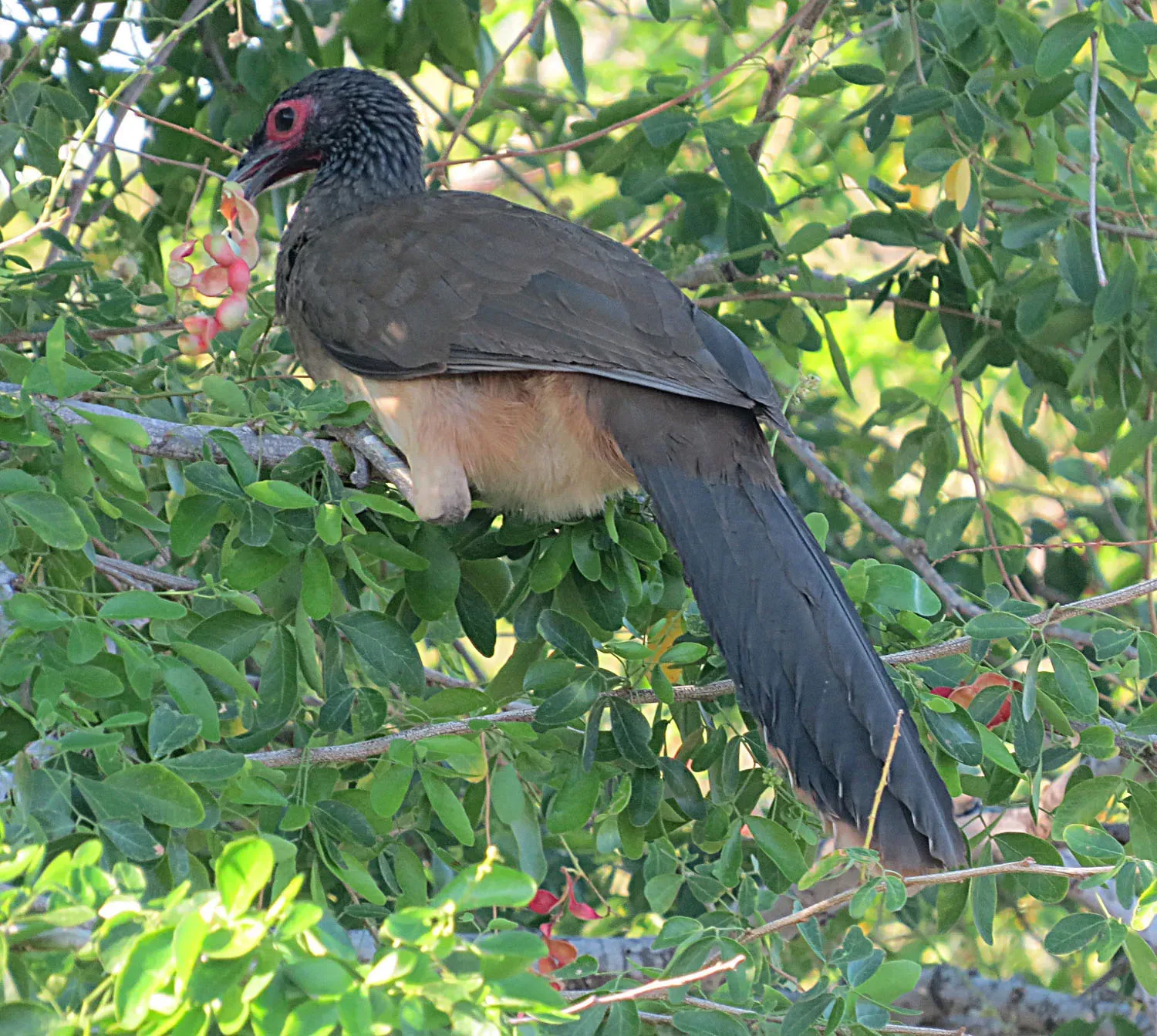
West Mexican Chachalaca
West Mexican Chachalaca
100
-
Points:
100
Not yet spotted on Fladder
Spotted
The Gray-headed Chachalaca is a New World game bird distinguished by its pale gray head, neck, and chest contrasting with a darker body. It is native to southwestern Mexico, preferring humid to semi-arid evergreen forests.
Where to spot
This chachalaca is endemic to southwestern Mexico, ranging from Jalisco to Oaxaca. Its preferred habitats include tropical deciduous and semi-evergreen forests, often near riverine areas or clearings.
How to spot
Listen for their distinctive, repetitive calls that sound like 'cha-cha-LAC-a!' to pinpoint their location. Look for them moving through the mid-story and canopy of trees, or occasionally foraging on the ground.
When to spot
They can be observed year-round. The best viewing opportunities arise during early mornings and late afternoons when the birds are most active and vocal.
Where to spot
This chachalaca is endemic to southwestern Mexico, ranging from Jalisco to Oaxaca. Its preferred habitats include tropical deciduous and semi-evergreen forests, often near riverine areas or clearings.
How to spot
Listen for their distinctive, repetitive calls that sound like 'cha-cha-LAC-a!' to pinpoint their location. Look for them moving through the mid-story and canopy of trees, or occasionally foraging on the ground.
When to spot
They can be observed year-round. The best viewing opportunities arise during early mornings and late afternoons when the birds are most active and vocal.


Credits:
Wikimedia Commons

Credits:
Wikimedia Commons

Credits:
Wikimedia Commons

Credits:
Wikimedia Commons

Credits:
Wikimedia Commons

Credits:
Wikimedia Commons

Credits:
Wikimedia Commons

Credits:
Wikimedia Commons

Credits:
Wikimedia Commons
Like other chachalacas, the Gray-headed Chachalaca is highly social, often forming small flocks that communicate with a range of loud, harsh calls, especially at sunrise.
Loading...
Spotted
No recently spotted birds
Monthly observations
No observations
Loading...
Nothing spotted yet
Also interesting



Share this page
Or share directly on
