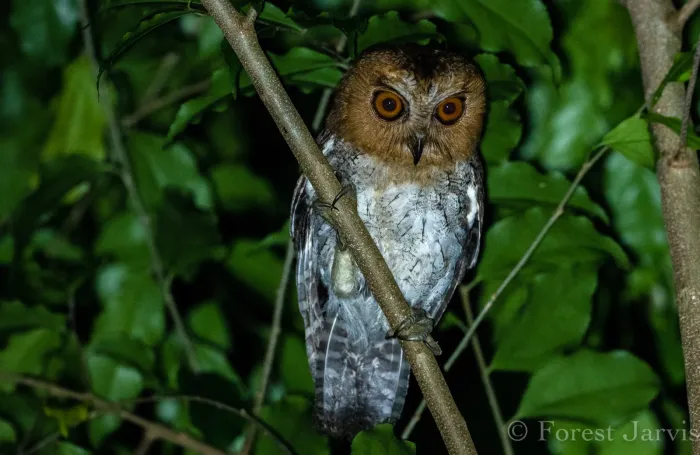
Fearful Owl
Fearful Owl
100
-
Points:
100
Not yet spotted on Fladder
Spotted
The scientific name Asio solomonensis is not widely recognized for a currently living bird species in mainstream ornithological lists. Information provided here is generalized for owls in the genus Asio, which are typically found in various habitats globally and known for their prominent ear tufts.
Where to spot
As a general Asio owl, look for it in diverse habitats including open woodlands, grasslands, savannas, and cultivated areas, often where prey such as rodents are abundant.
How to spot
Identifying Asio owls often involves observing their prominent ear tufts, though these can be flattened. Listen for their varied vocalizations, which range from hoots to barks and hisses. Scan open areas or look for communal roosts in dense cover.
When to spot
Most Asio owls are nocturnal, active from dusk through dawn. Some species are also known to hunt during daylight hours, especially on cloudy days or during migration periods.
Where to spot
As a general Asio owl, look for it in diverse habitats including open woodlands, grasslands, savannas, and cultivated areas, often where prey such as rodents are abundant.
How to spot
Identifying Asio owls often involves observing their prominent ear tufts, though these can be flattened. Listen for their varied vocalizations, which range from hoots to barks and hisses. Scan open areas or look for communal roosts in dense cover.
When to spot
Most Asio owls are nocturnal, active from dusk through dawn. Some species are also known to hunt during daylight hours, especially on cloudy days or during migration periods.
Many Asio owls employ silent flight, thanks to specialized feathers, enabling them to ambush their prey effectively in open or semi-open environments.
Loading...
Spotted
No recently spotted birds
Monthly observations
No observations
Loading...
Nothing spotted yet
Also interesting





Share this page
Or share directly on
