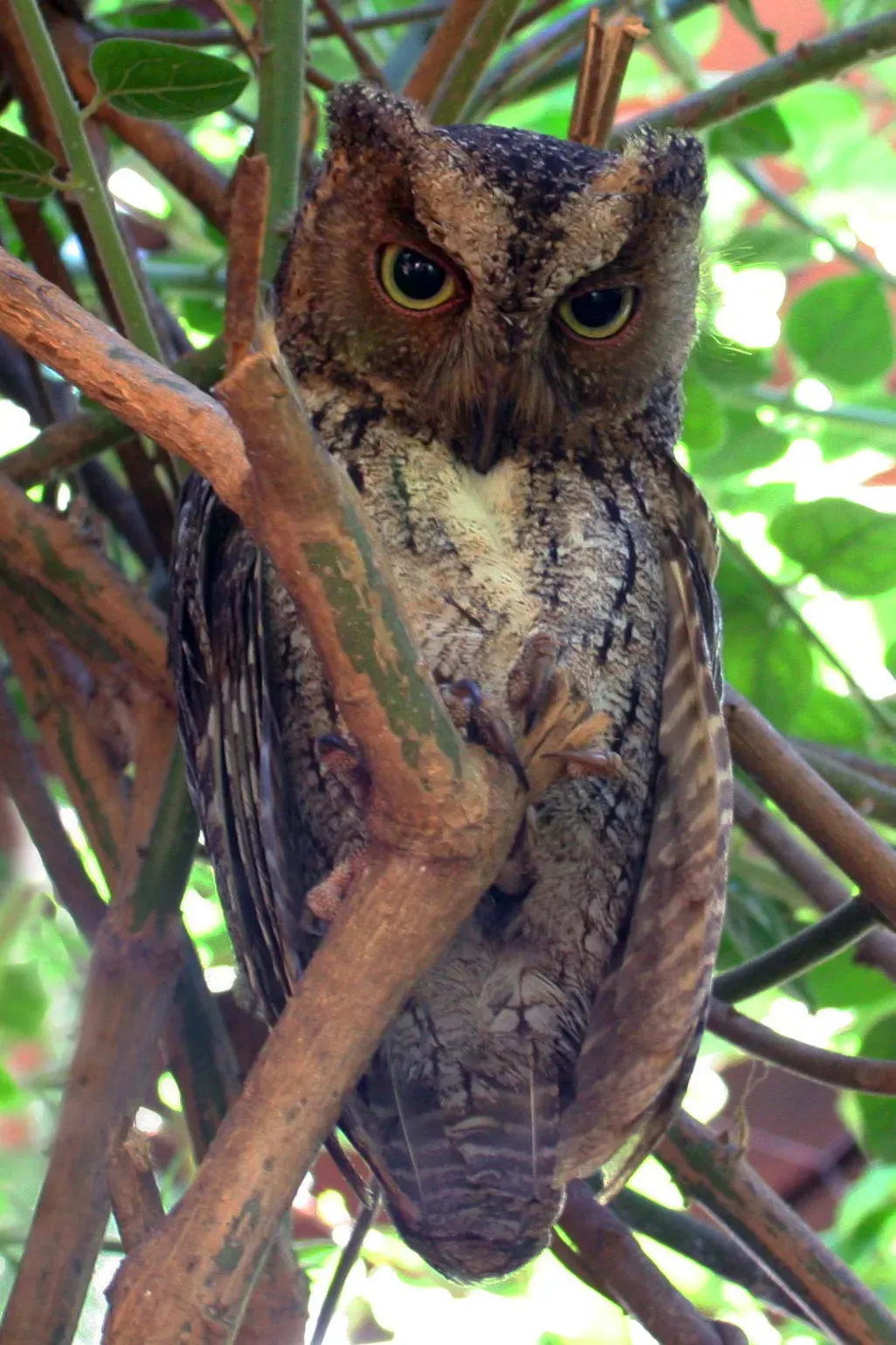
Eurasian Scops-Owl
Eurasian Scops-Owl
80
3 weeks ago
door
Esther Esser
Points:
80
E
R


+8


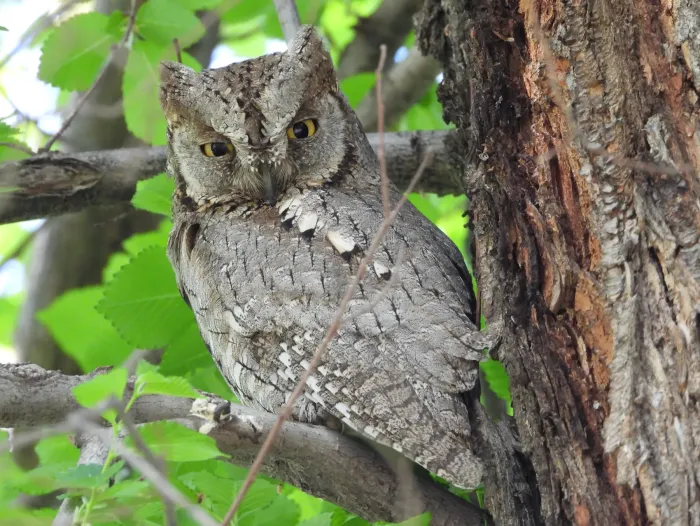
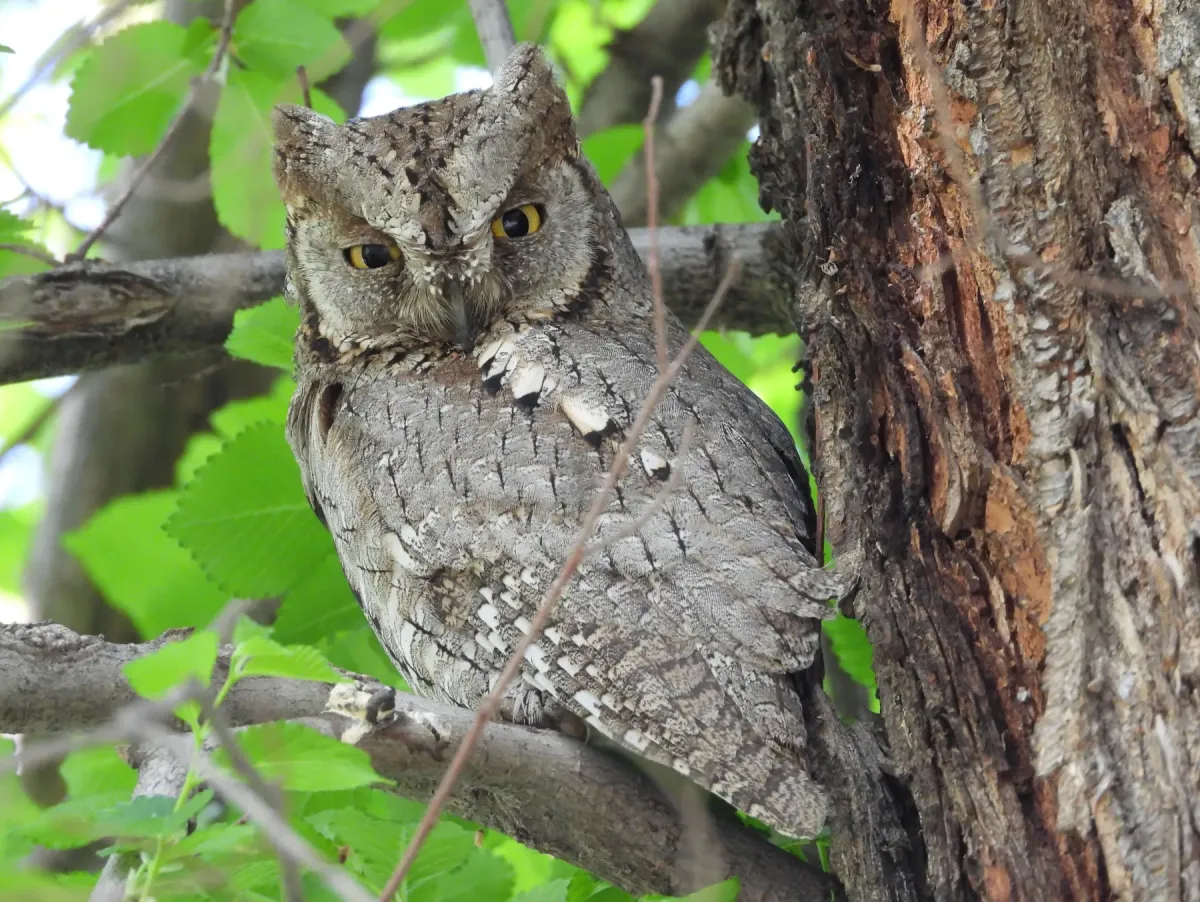
The Eurasian Scops Owl is a very small, migratory owl with prominent ear tufts, perfectly camouflaged against tree bark. It is strictly nocturnal and known for its monotonous, fluting call.
Where to spot
Open woodlands, orchards, parks, and gardens, often near human habitation, across Southern Europe, North Africa, and parts of Asia. Migrates to sub-Saharan Africa for winter.
How to spot
Listen intently for its distinctive, monotonous, single-note whistle call after dusk. Finding one visually is very challenging due to its excellent camouflage and small size. A careful use of a spotlight can sometimes reveal it at night.
When to spot
Strictly nocturnal. Best detected by its repetitive, whistle-like 'tjoo-tjoo-tjoo' call during the breeding season (spring/summer nights). Visual sightings are extremely rare without specific searching.
Where to spot
Open woodlands, orchards, parks, and gardens, often near human habitation, across Southern Europe, North Africa, and parts of Asia. Migrates to sub-Saharan Africa for winter.
How to spot
Listen intently for its distinctive, monotonous, single-note whistle call after dusk. Finding one visually is very challenging due to its excellent camouflage and small size. A careful use of a spotlight can sometimes reveal it at night.
When to spot
Strictly nocturnal. Best detected by its repetitive, whistle-like 'tjoo-tjoo-tjoo' call during the breeding season (spring/summer nights). Visual sightings are extremely rare without specific searching.

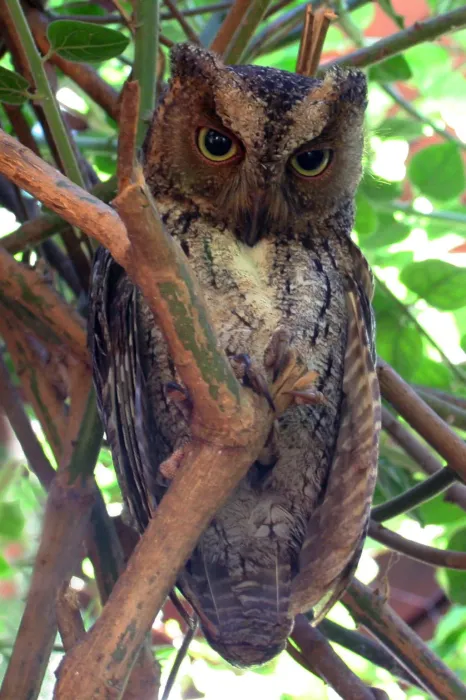

Credits:
Door Frank Vassen from Brussels, Belgium - Scops Owl (Otus scops), Kalloni, Lesvos, Greece, 19.04.2015, CC BY 2.0, https://commons.wikimedia.org/w/index.php?curid=43769588
Credits:
Wikimedia Commons
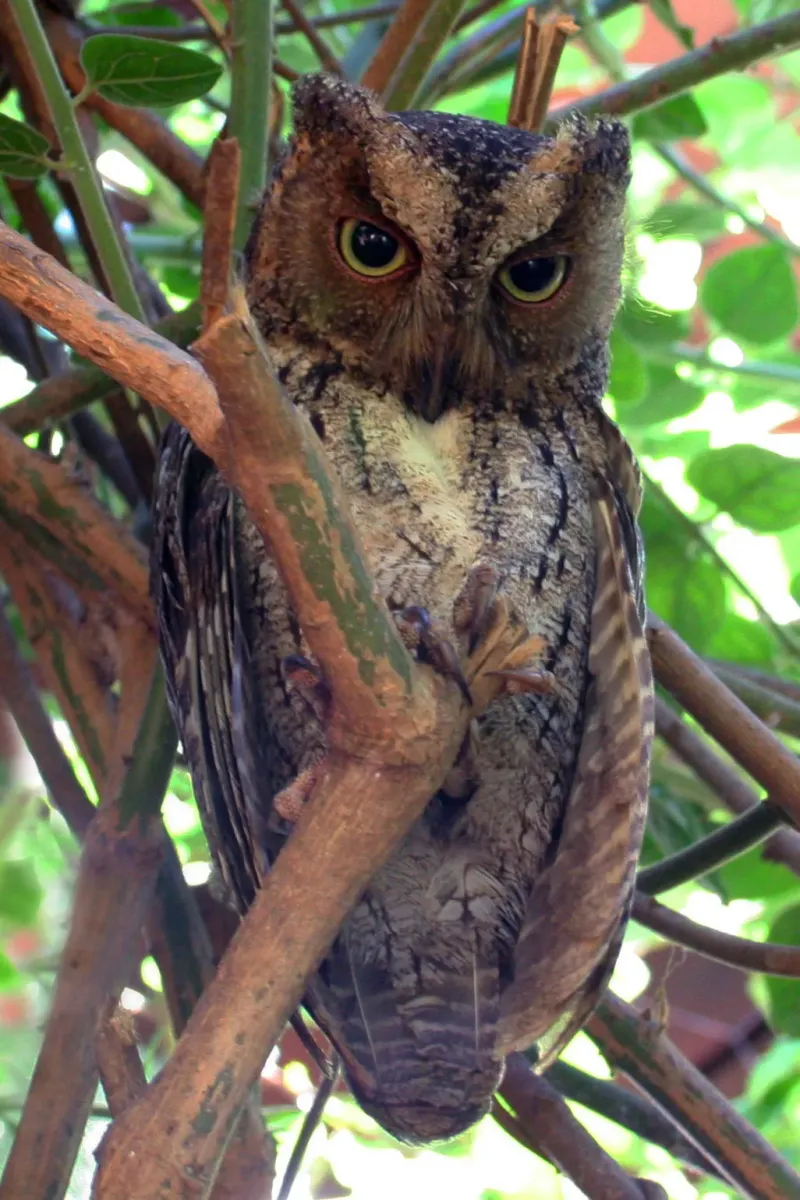
Credits:
Wikimedia Commons
The Eurasian Scops Owl is a master of camouflage; it can stretch its body vertically and compress its feathers to mimic a broken tree branch, making it almost invisible to predators and observers alike.
Loading...
Spotted
- Recently spotted
- 12 (Seen in the last 3 months)
- Last spotted
- 3 weeks ago door Esther Esser
Monthly observations
19 observations
Loading...





















Also interesting



Share this page
Or share directly on
