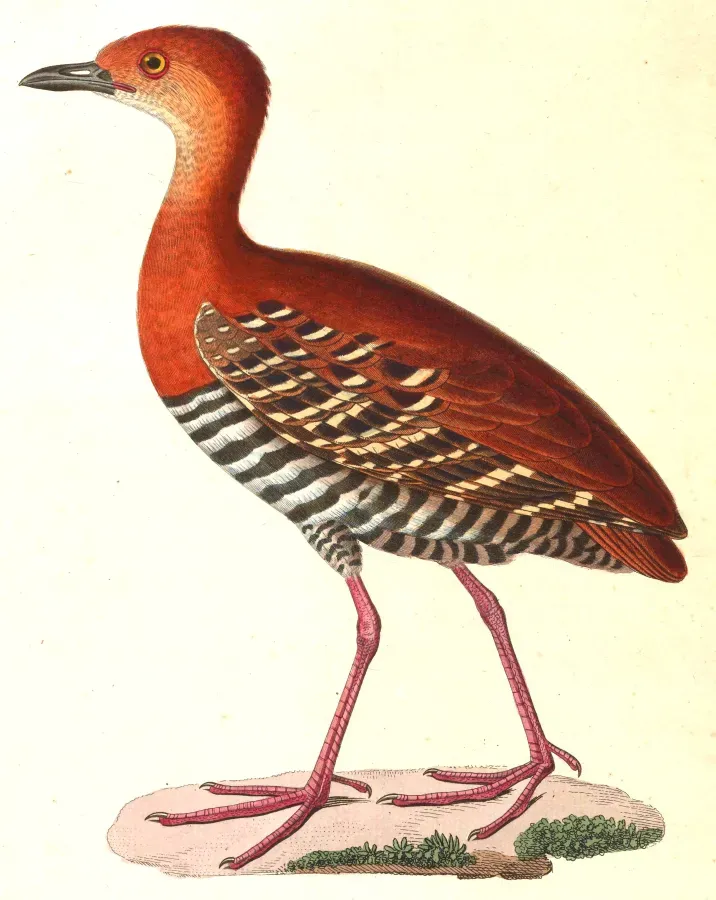
Red-legged Crake
Red-legged Crake
100
-
Points:
100
Not yet spotted on Fladder
Spotted
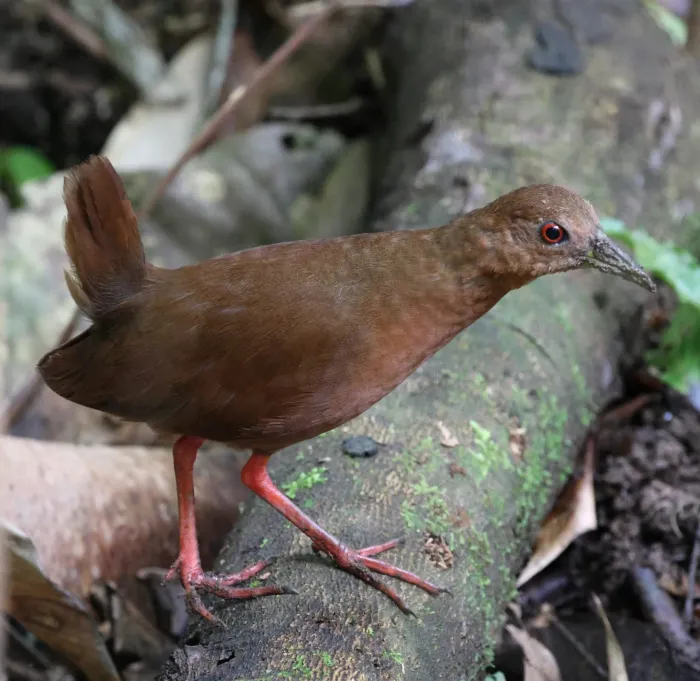
The Red-legged Crake (Rallina fasciata) is a small, colorful rail found across Southeast Asia. It is easily identified by its bright red legs and bill, along with a grey face and a rufous-barred belly.
Where to spot
Widespread across Southeast Asia, from Myanmar and Thailand to Indonesia and the Philippines. Inhabits dense wetland habitats such as swamps, marshes, wet grasslands, and overgrown ditches.
How to spot
Look for its bright red legs and bill, often as it walks along the edges of dense reeds or vegetation. It is very secretive, so listen for its soft grunts or calls coming from thick cover. Patience is key.
When to spot
Year-round resident. Most active at dawn and dusk, when it may forage more openly, but can be glimpsed during the day in quiet areas.
Where to spot
Widespread across Southeast Asia, from Myanmar and Thailand to Indonesia and the Philippines. Inhabits dense wetland habitats such as swamps, marshes, wet grasslands, and overgrown ditches.
How to spot
Look for its bright red legs and bill, often as it walks along the edges of dense reeds or vegetation. It is very secretive, so listen for its soft grunts or calls coming from thick cover. Patience is key.
When to spot
Year-round resident. Most active at dawn and dusk, when it may forage more openly, but can be glimpsed during the day in quiet areas.


Credits:
Wikimedia Commons
Despite its vibrant coloration, the Red-legged Crake is notoriously shy and often remains hidden in dense vegetation, making fleeting glimpses a special treat for birdwatchers.
Loading...
Spotted
No recently spotted birds
Monthly observations
No observations
Loading...
Nothing spotted yet
Also interesting



Share this page
Or share directly on
