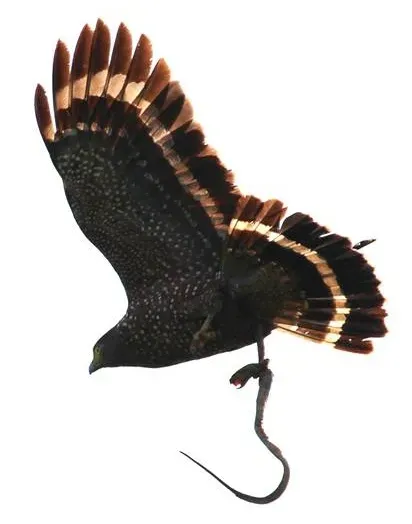
Philippine Serpent-Eagle
Philippine Serpent-Eagle
100
-
Points:
100
Not yet spotted on Fladder
Spotted
The Philippine Serpent Eagle is an endemic raptor of the Philippines, distinguished by its heavily spotted plumage and a preference for hunting snakes and lizards. It is a common sight in the archipelago's forested areas.
Where to spot
Forests and woodlands throughout the Philippine archipelago, from lowlands to lower montane elevations.
How to spot
Look for its heavily spotted underparts, broad wings, and typical serpent eagle crest and shape. Its loud, ringing calls often give away its presence and are a good way to locate it in dense habitat.
When to spot
Year-round, active during daylight. Commonly seen soaring or perched in forest clearings or at the edges of woodlands.
Where to spot
Forests and woodlands throughout the Philippine archipelago, from lowlands to lower montane elevations.
How to spot
Look for its heavily spotted underparts, broad wings, and typical serpent eagle crest and shape. Its loud, ringing calls often give away its presence and are a good way to locate it in dense habitat.
When to spot
Year-round, active during daylight. Commonly seen soaring or perched in forest clearings or at the edges of woodlands.


Credits:
Wikimedia Commons

Credits:
Wikimedia Commons
Its scientific name 'holospilus' means 'all spotted,' referring to the extensive spotting on its underparts, a key identification feature distinguishing it from other serpent eagles.
Loading...
Spotted
No recently spotted birds
Monthly observations
No observations
Loading...
Nothing spotted yet
Also interesting


Share this page
Or share directly on
