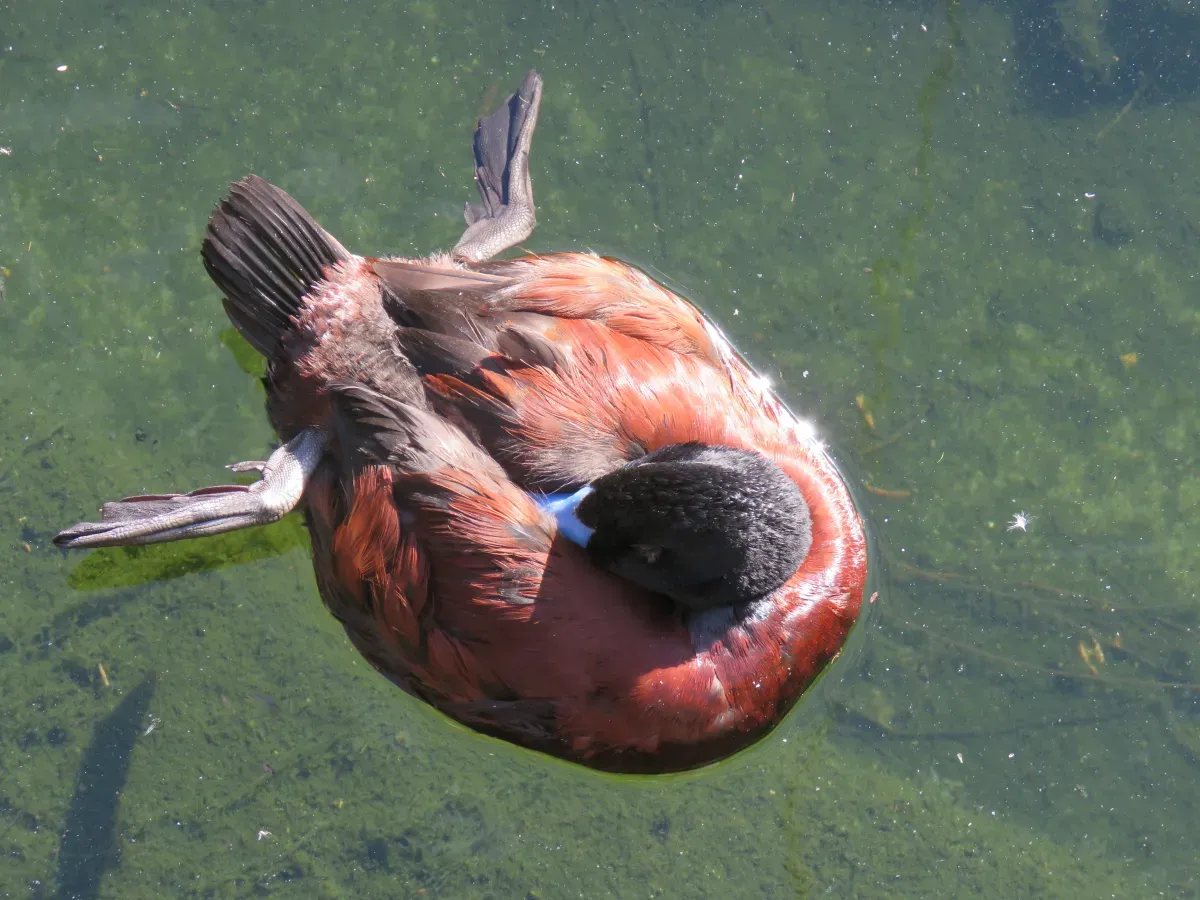
Blue-billed Duck
Where to spot
Found across temperate southeastern and southwestern Australia. They inhabit deep, permanent freshwater wetlands, lakes, and reservoirs that have dense emergent vegetation for cover.
How to spot
Look for a small, dark, compact duck that sits low in the water with a noticeably stiff tail often held erect. Males are unmistakable due to their brilliant blue bill; females are duller brown with a dark bill, but both sexes share the characteristic stiff tail posture and diving behavior.
When to spot
Year-round in suitable habitats. Breeding activity is typically from September to February, which is when males are in their most vibrant blue-billed breeding plumage and are more conspicuous.
Where to spot
Found across temperate southeastern and southwestern Australia. They inhabit deep, permanent freshwater wetlands, lakes, and reservoirs that have dense emergent vegetation for cover.
How to spot
Look for a small, dark, compact duck that sits low in the water with a noticeably stiff tail often held erect. Males are unmistakable due to their brilliant blue bill; females are duller brown with a dark bill, but both sexes share the characteristic stiff tail posture and diving behavior.
When to spot
Year-round in suitable habitats. Breeding activity is typically from September to February, which is when males are in their most vibrant blue-billed breeding plumage and are more conspicuous.


Credits:
Wikimedia Commons

Credits:
Wikimedia Commons

Credits:
Wikimedia Commons

Credits:
Wikimedia Commons

Credits:
Wikimedia Commons

Credits:
Wikimedia Commons

Credits:
Wikimedia Commons
Blue-billed Ducks are highly aquatic, rarely venturing onto land. They are expert divers, capable of staying submerged for extended periods to feed on aquatic invertebrates, and are even known to sleep while floating offshore.
Loading...
Spotted
No recently spotted birds
Monthly observations
1 observation
Loading...
Also interesting


Share this page
Or share directly on
