Black-eared Cuckoo
Black-eared Cuckoo
100
-
Points:
100
Not yet spotted on Fladder
Spotted
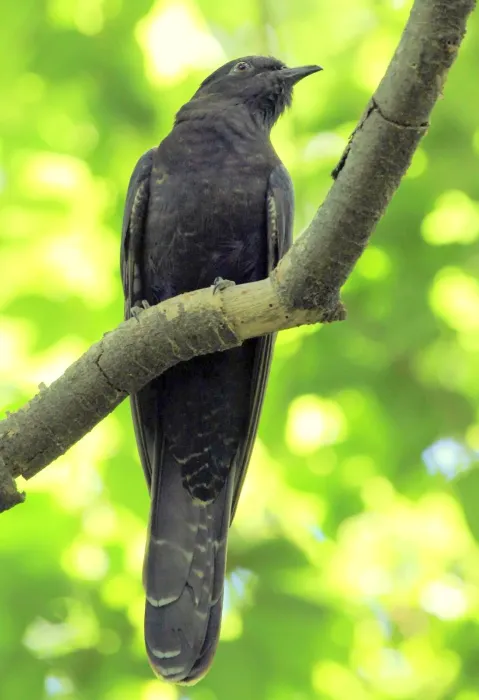
The Black-eared Cuckoo is a small, brood-parasitic cuckoo found in Australia and Southeast Asia. It is characterized by its dusky brown upperparts, paler underparts, and a distinctive black stripe extending from behind the eye. This species is often difficult to spot in its dry woodland habitat.
Where to spot
Primarily found in dry eucalypt woodlands, acacia scrub, and mallee habitats across inland Australia. Also migrates to parts of New Guinea and Indonesia.
How to spot
Look for its relatively small size, brownish plumage, and the dark patch behind the eye. Its distinctive mournful, descending whistle, 'fweee fweee,' is often heard before the bird is seen. They are often active in the canopy, making visual identification challenging.
When to spot
Most reliably observed in Australia during spring and summer (September-February) when they are breeding. They migrate north during the Australian autumn/winter.
Where to spot
Primarily found in dry eucalypt woodlands, acacia scrub, and mallee habitats across inland Australia. Also migrates to parts of New Guinea and Indonesia.
How to spot
Look for its relatively small size, brownish plumage, and the dark patch behind the eye. Its distinctive mournful, descending whistle, 'fweee fweee,' is often heard before the bird is seen. They are often active in the canopy, making visual identification challenging.
When to spot
Most reliably observed in Australia during spring and summer (September-February) when they are breeding. They migrate north during the Australian autumn/winter.
This cuckoo is a brood parasite, meaning it lays its eggs in the nests of other bird species, typically fairywrens or thornbills, leaving the foster parents to raise its young.
Loading...
Spotted
No recently spotted birds
Monthly observations
No observations
Loading...
Nothing spotted yet
Also interesting




Share this page
Or share directly on
