
Short-tailed Albatross
Short-tailed Albatross
100
2 years ago
door
jenny van Dorland
Points:
100

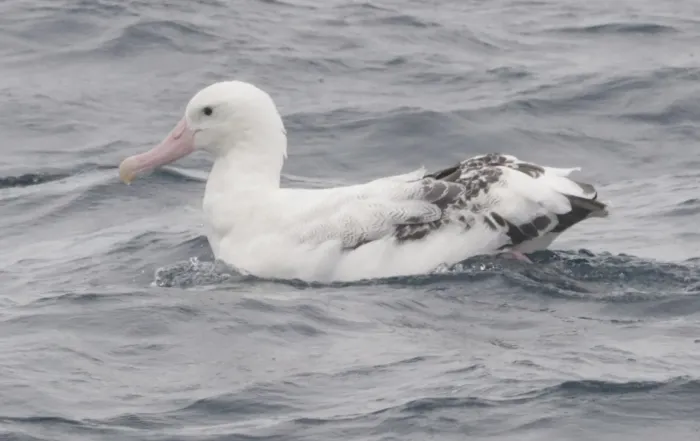
The Short-tailed Albatross is a large and critically endangered albatross of the North Pacific. It is characterized by its large pink bill with a blue tip and yellow crown feathers (in adults). Once thought extinct, its slow recovery is a major conservation success story. This species is highly migratory.
Where to spot
Breeds almost entirely on Torishima and a few other remote islands off Japan. Forages widely across the North Pacific, including off the coasts of Alaska, Canada, and the western United States.
How to spot
Look for its large size, pink bill with a blue tip, and yellowish wash on the head of adults. Juveniles are entirely dark. Observe its powerful soaring flight. Due to its extreme rarity, any sighting is significant. Observation generally requires specialized pelagic birding trips.
When to spot
Present on breeding islands from November to June. Best observed during pelagic trips in the North Pacific, especially during winter months, or occasionally from shore during strong winds in its foraging areas. Sightings are rare due to its critically endangered status.
Where to spot
Breeds almost entirely on Torishima and a few other remote islands off Japan. Forages widely across the North Pacific, including off the coasts of Alaska, Canada, and the western United States.
How to spot
Look for its large size, pink bill with a blue tip, and yellowish wash on the head of adults. Juveniles are entirely dark. Observe its powerful soaring flight. Due to its extreme rarity, any sighting is significant. Observation generally requires specialized pelagic birding trips.
When to spot
Present on breeding islands from November to June. Best observed during pelagic trips in the North Pacific, especially during winter months, or occasionally from shore during strong winds in its foraging areas. Sightings are rare due to its critically endangered status.


Credits:
Wikimedia Commons

Credits:
Wikimedia Commons
The Short-tailed Albatross was extensively hunted for its feathers in the late 19th and early 20th centuries, pushing it to the brink of extinction. Only a few dozen individuals survived.




Also interesting




Share this page
Or share directly on
