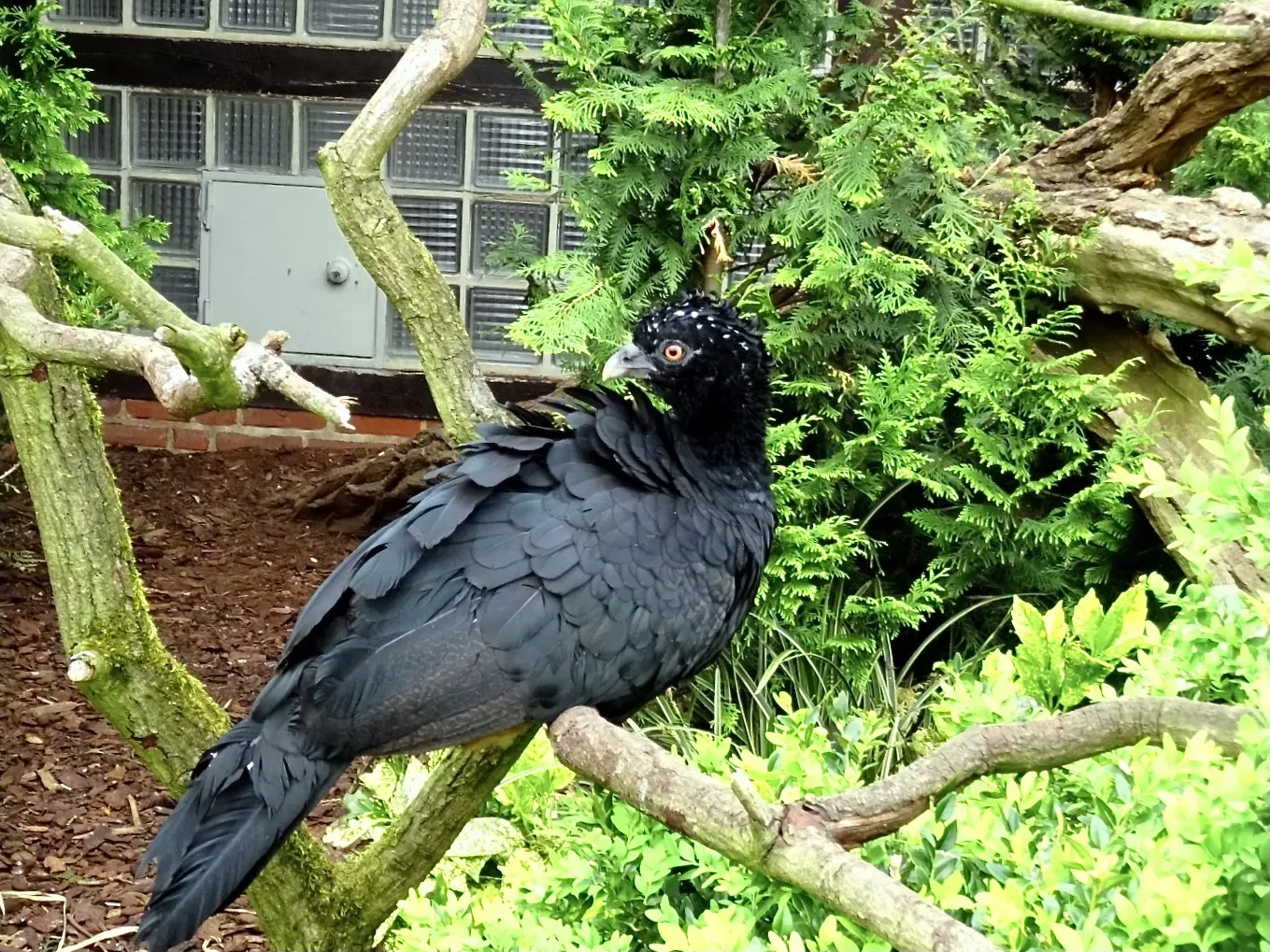
Red-billed Curassow
Red-billed Curassow
100
-
Points:
100
Not yet spotted on Fladder
Spotted
The Red-billed Curassow is an endangered species endemic to a small region of the Atlantic Forest in southeastern Brazil. Males are glossy black with a striking red bill and cere, while females are black with a chestnut belly and a distinctive barred tail.
Where to spot
Restricted to fragmented remnants of the Atlantic Forest in southeastern Brazil, primarily in the states of Espírito Santo, Bahia, and Minas Gerais. It prefers dense lowland and submontane humid forests.
How to spot
Observing this rare curassow requires visiting its specific, protected forest reserves. Move quietly and patiently through the forest undergrowth. Listen for its deep, booming calls, which can carry some distance and indicate its presence.
When to spot
Active during daylight hours, often most observable at dawn and dusk when foraging on the forest floor. They tend to be more secretive during the midday heat.
Where to spot
Restricted to fragmented remnants of the Atlantic Forest in southeastern Brazil, primarily in the states of Espírito Santo, Bahia, and Minas Gerais. It prefers dense lowland and submontane humid forests.
How to spot
Observing this rare curassow requires visiting its specific, protected forest reserves. Move quietly and patiently through the forest undergrowth. Listen for its deep, booming calls, which can carry some distance and indicate its presence.
When to spot
Active during daylight hours, often most observable at dawn and dusk when foraging on the forest floor. They tend to be more secretive during the midday heat.


Credits:
Wikimedia Commons

Credits:
Wikimedia Commons

Credits:
Wikimedia Commons

Credits:
Wikimedia Commons

Credits:
Wikimedia Commons

Credits:
Wikimedia Commons

Credits:
Wikimedia Commons
The Red-billed Curassow has been a focus of intensive conservation efforts, including captive breeding programs, due to severe habitat loss in its native Atlantic Forest.
Loading...
Spotted
No recently spotted birds
Monthly observations
No observations
Loading...
Nothing spotted yet
Also interesting


Share this page
Or share directly on
