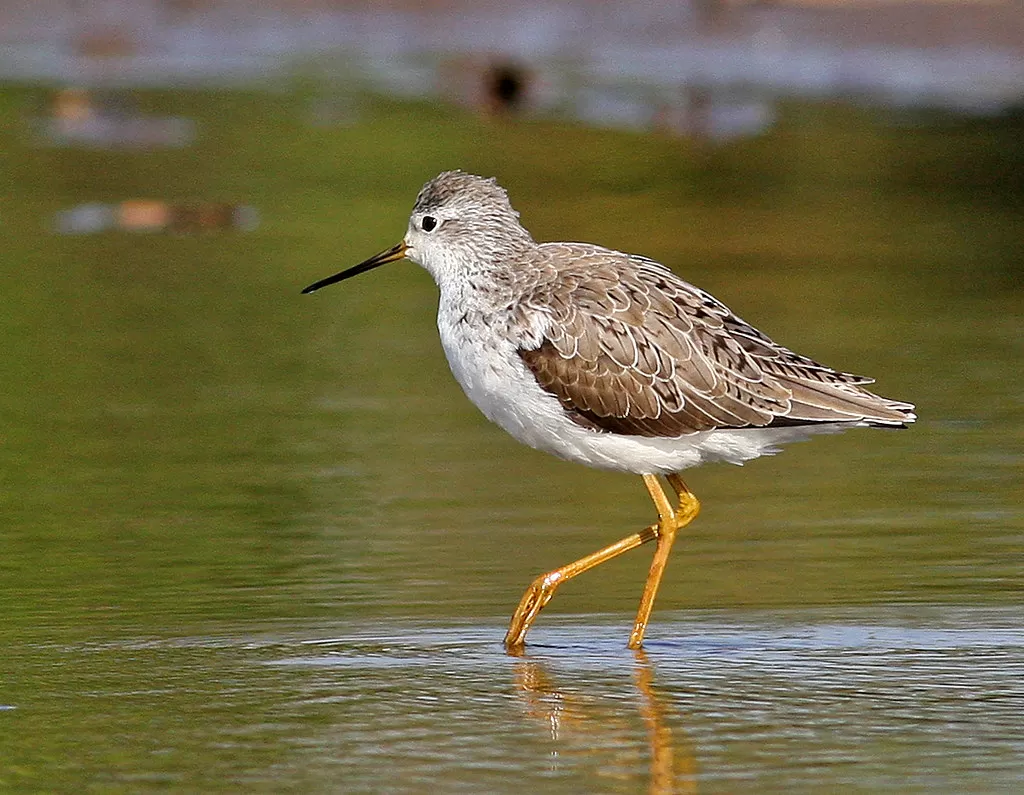
Marsh Sandpiper


Where to spot
Breeds in eastern Europe and across Siberia to the Russian Far East. Winters mainly in Africa, the Indian subcontinent, Southeast Asia, and Australia.
How to spot
Identify by its exceptionally long, greenish-grey legs and slender, straight, needle-like bill. It has a pale overall appearance, especially in non-breeding plumage. In flight, it shows a clean white rump and no wing-bar.
When to spot
Breeding season is from May to July. Migration occurs from August to October (southbound) and March to May (northbound).
Where to spot
Breeds in eastern Europe and across Siberia to the Russian Far East. Winters mainly in Africa, the Indian subcontinent, Southeast Asia, and Australia.
How to spot
Identify by its exceptionally long, greenish-grey legs and slender, straight, needle-like bill. It has a pale overall appearance, especially in non-breeding plumage. In flight, it shows a clean white rump and no wing-bar.
When to spot
Breeding season is from May to July. Migration occurs from August to October (southbound) and March to May (northbound).


Credits:
f_snarfel

Credits:
f_snarfel

Credits:
Lip Kee
The Marsh Sandpiper's very long legs allow it to wade into deeper water than many other similarly sized waders, giving it access to different feeding areas.
Loading...
Spotted
No recently spotted birds
Monthly observations
4 observations
Loading...
Also interesting





Share this page
Or share directly on
