Geelvink Cicadabird
Geelvink Cicadabird
100
-
Points:
100
Not yet spotted on Fladder
Spotted
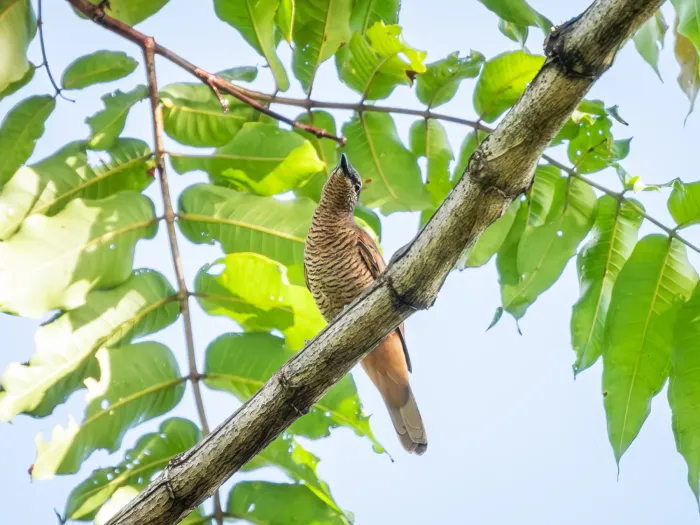
Meyer's Cicadabird is an active and elusive inhabitant of the forest canopy, characterized by its generally dark plumage with subtle variations between sexes. It is primarily insectivorous, gleaning prey from foliage.
Where to spot
Endemic to New Guinea, found in hill and montane forests, typically at higher elevations. They are most often seen in the canopy and sub-canopy layers of mature forests.
How to spot
This species can be quite challenging to spot due to its dark plumage and canopy dwelling habits. Listen for its calls, which can be high-pitched or buzzing, and scan the upper parts of trees carefully with binoculars.
When to spot
Active year-round in its montane tropical habitat. Early mornings are typically the best time to observe them when they are most active in foraging.
Where to spot
Endemic to New Guinea, found in hill and montane forests, typically at higher elevations. They are most often seen in the canopy and sub-canopy layers of mature forests.
How to spot
This species can be quite challenging to spot due to its dark plumage and canopy dwelling habits. Listen for its calls, which can be high-pitched or buzzing, and scan the upper parts of trees carefully with binoculars.
When to spot
Active year-round in its montane tropical habitat. Early mornings are typically the best time to observe them when they are most active in foraging.
The specific epithet 'meyerii' honors German ornithologist Adolf Bernhard Meyer, reflecting the historical importance of European naturalists in cataloging global bird diversity.
Loading...
Spotted
No recently spotted birds
Monthly observations
No observations
Loading...
Nothing spotted yet
Also interesting




Share this page
Or share directly on
