Where to spot
Found across eastern North America, from southern Canada south through the eastern United States. It inhabits dense brush, forest edges, suburban thickets, and overgrown fields.
How to spot
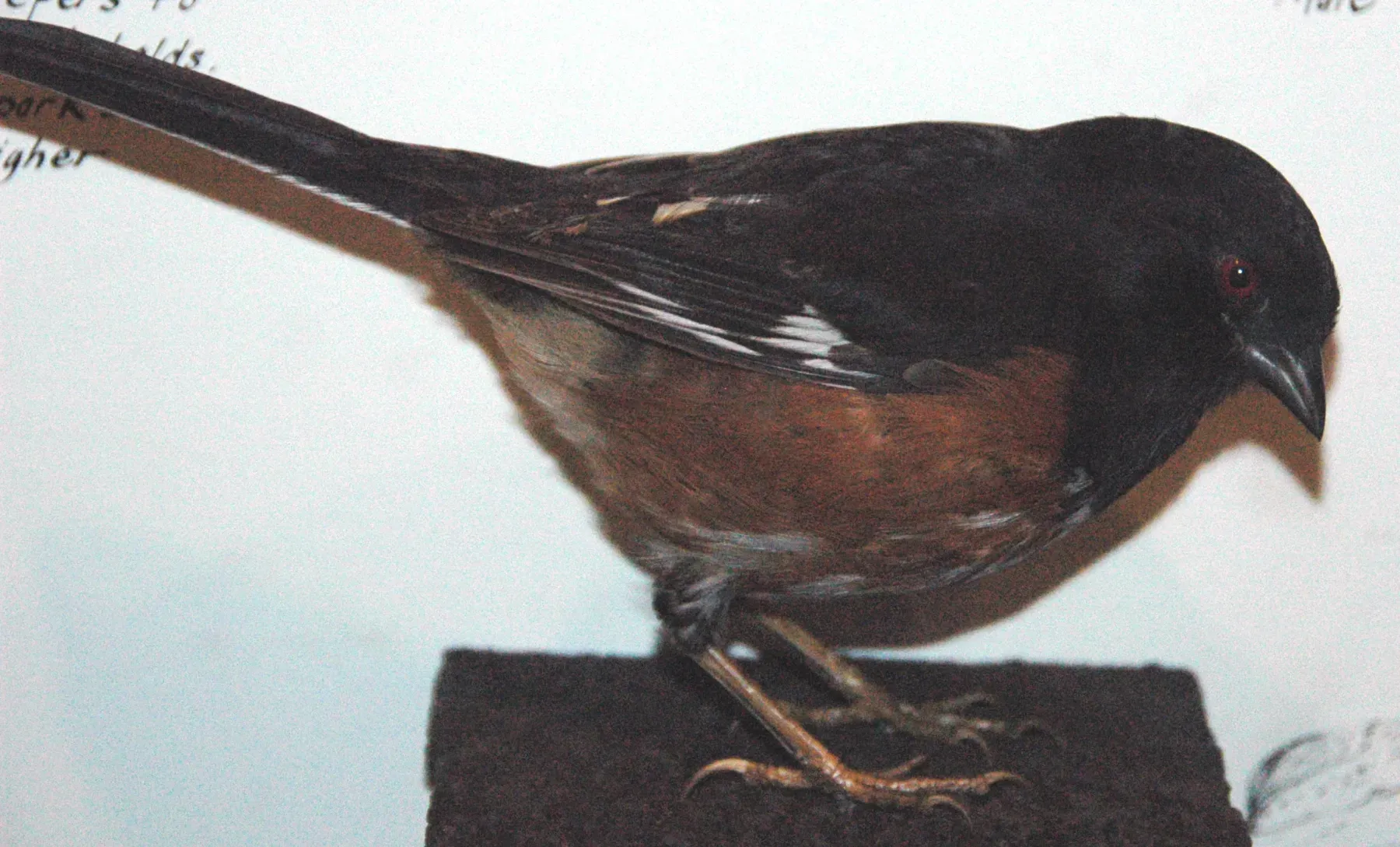
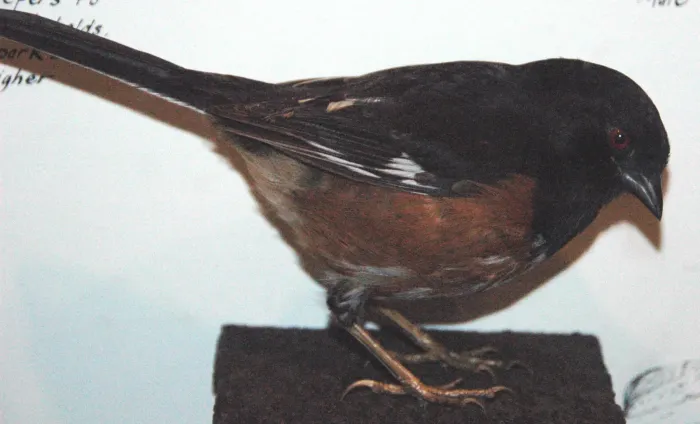
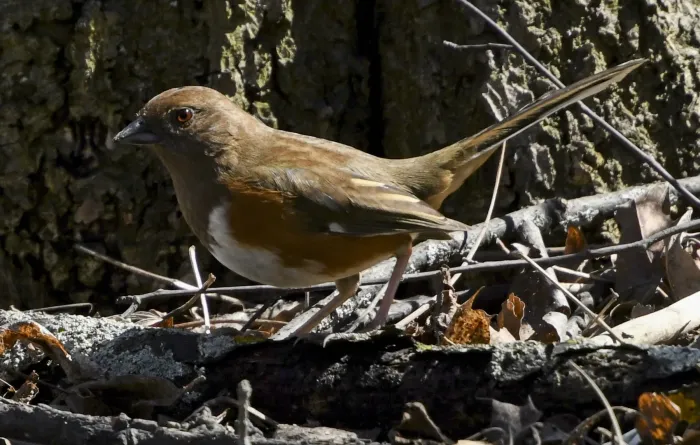
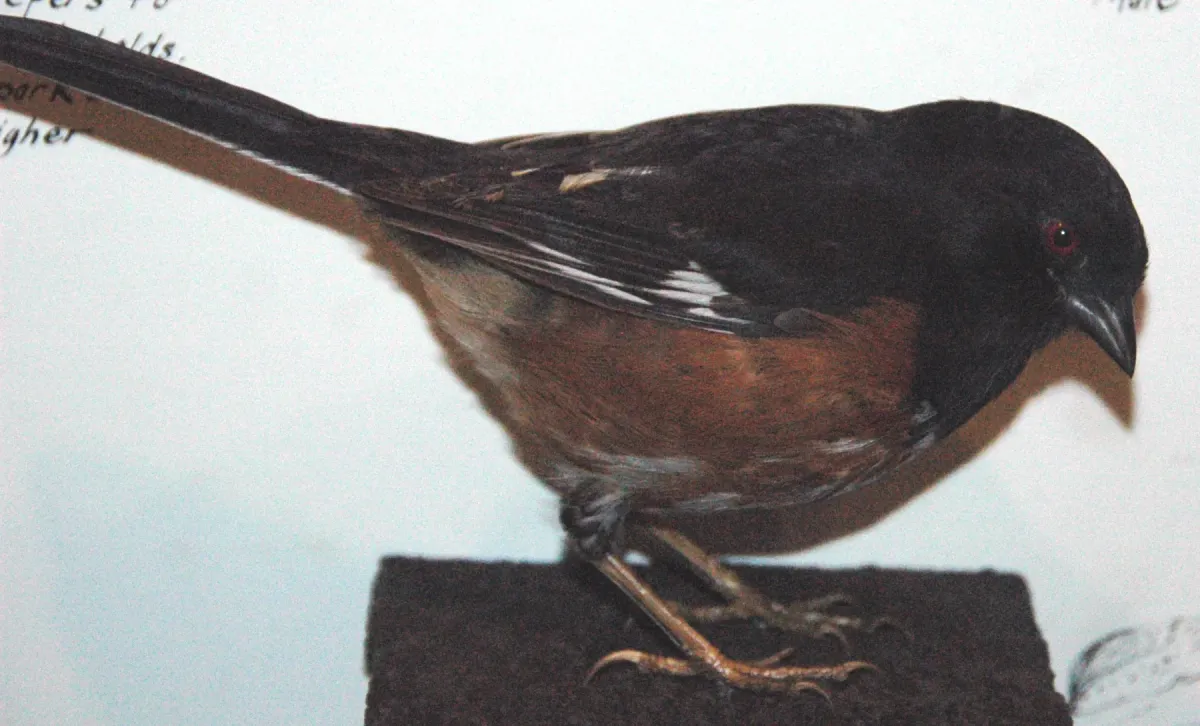
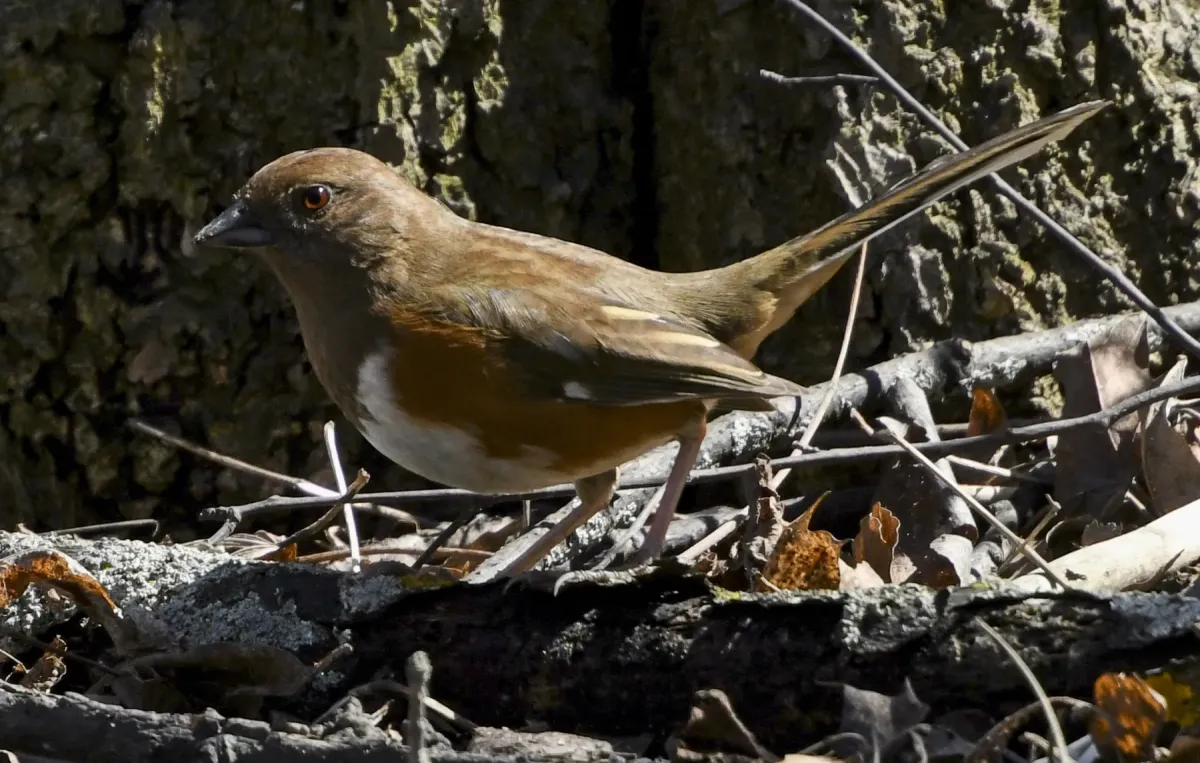
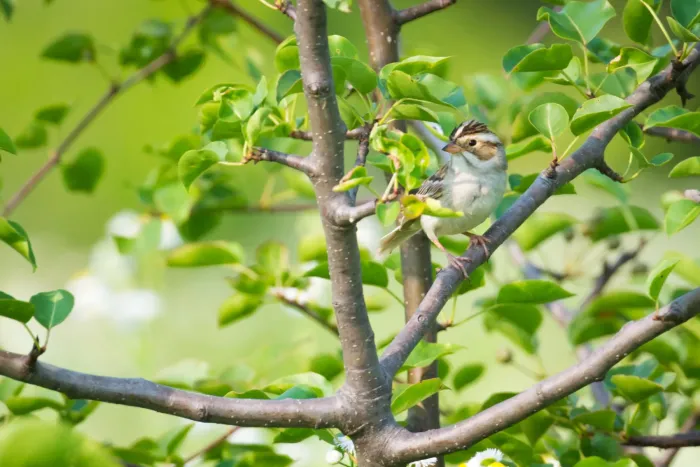
Look for its black (male) or brown (female) head, back, and wings, white belly, and rufous flanks. It often forages on the ground with a characteristic two-footed scratch. Listen for its loud calls and song.
When to spot
Resident year-round in much of its southern range, migratory in the north. Active throughout the day, often scratching in leaf litter on the ground.
Where to spot
Found across eastern North America, from southern Canada south through the eastern United States. It inhabits dense brush, forest edges, suburban thickets, and overgrown fields.
How to spot
Look for its black (male) or brown (female) head, back, and wings, white belly, and rufous flanks. It often forages on the ground with a characteristic two-footed scratch. Listen for its loud calls and song.
When to spot
Resident year-round in much of its southern range, migratory in the north. Active throughout the day, often scratching in leaf litter on the ground.


Credits:
Wikimedia Commons
Credits:
Wikimedia Commons
Credits:
Wikimedia Commons
Its distinctive call, a loud 'chewink,' and its song, often interpreted as 'drink your tea,' are iconic sounds of eastern North American woodlands and shrublands.
Also interesting





Share this page
Or share directly on
