Yellow-eyed Starling
Yellow-eyed Starling
100
-
Points:
100
Not yet spotted on Fladder
Spotted
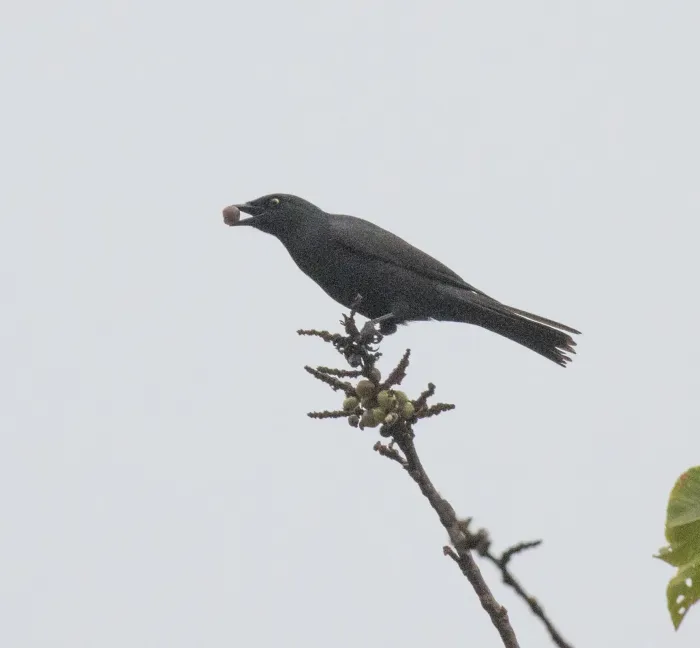
A medium-sized, dark starling found on New Guinea and some adjacent islands. It is generally uniform in coloration, lacking the strong iridescence of many other starlings.
Where to spot
Forest edges, disturbed forests, and garden areas in New Guinea and smaller islands off its coast.
How to spot
Look for a plain, dark starling, often in small groups. Its less iridescent plumage differentiates it from many other starlings in its range. Listen for typical starling calls.
When to spot
Year-round resident. Active during daylight hours, often seen foraging in the canopy or mid-story.
Where to spot
Forest edges, disturbed forests, and garden areas in New Guinea and smaller islands off its coast.
How to spot
Look for a plain, dark starling, often in small groups. Its less iridescent plumage differentiates it from many other starlings in its range. Listen for typical starling calls.
When to spot
Year-round resident. Active during daylight hours, often seen foraging in the canopy or mid-story.
While its common name suggests mimicry, the Mimic Starling is not particularly known for vocal mimicry, a trait more common in other starling species. Its name likely refers to its ability to blend in.
Loading...
Spotted
No recently spotted birds
Monthly observations
No observations
Loading...
Nothing spotted yet
Also interesting



Share this page
Or share directly on
