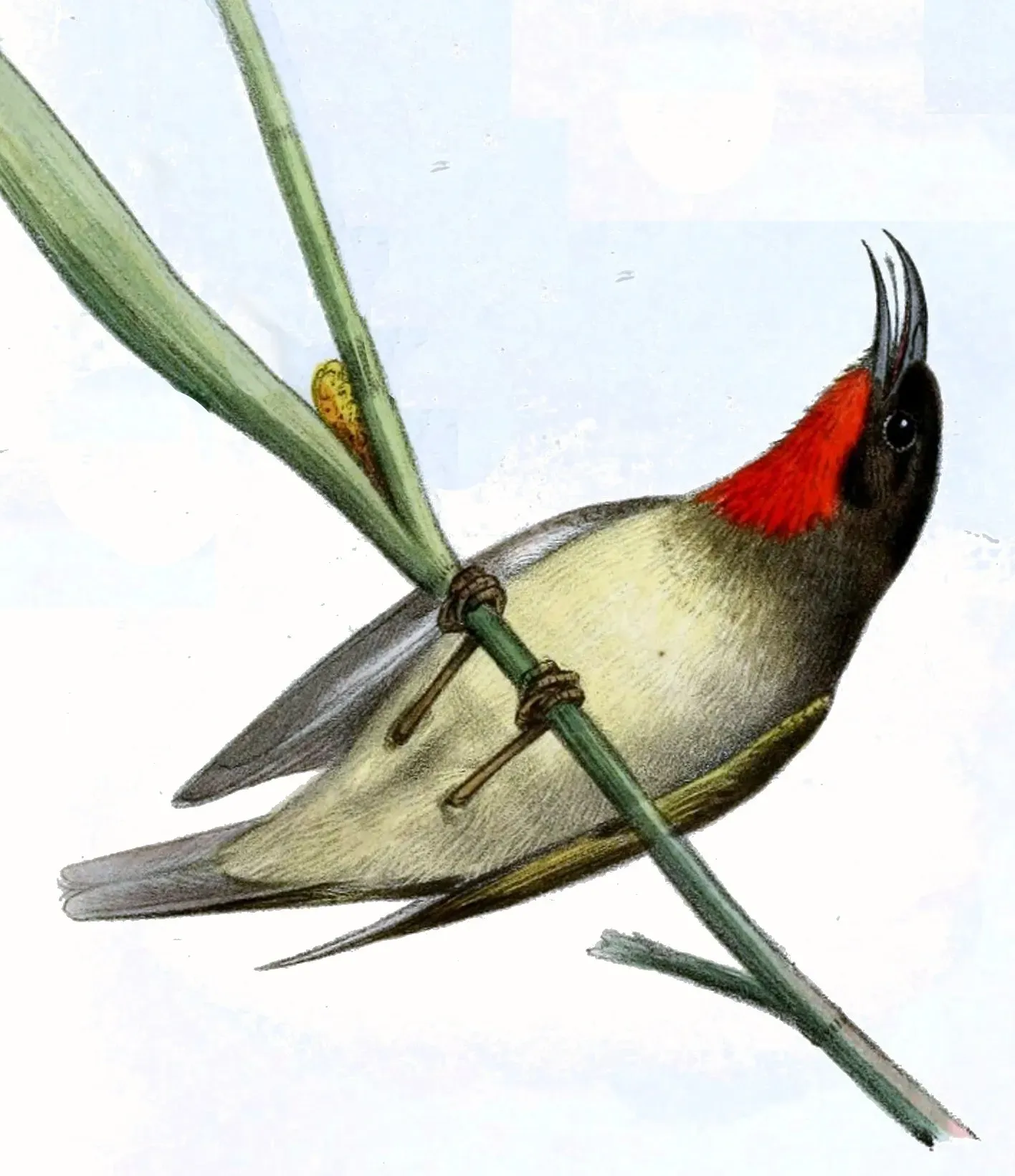
Sclater's Myzomela
Sclater's Myzomela
100
-
Points:
100
Not yet spotted on Fladder
Spotted
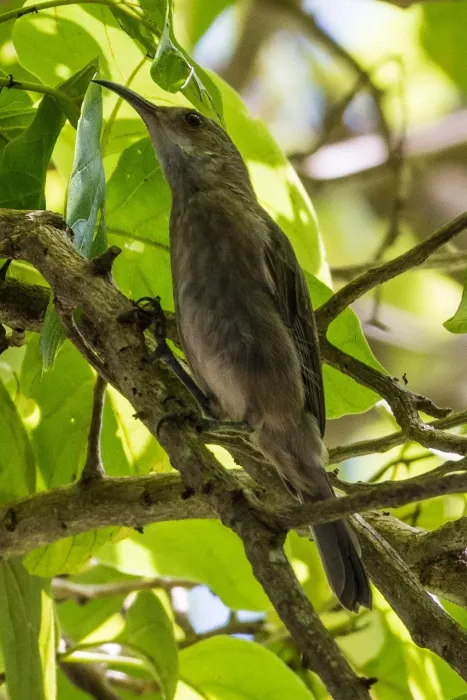
Sclater's Myzomela is a small, dark honeyeater endemic to New Britain. It is characterized by its dusky plumage and a subtle red patch on the chin.
Where to spot
Endemic to the island of New Britain in the Bismarck Archipelago, Papua New Guinea. It inhabits lowland and hill forests, often favoring primary forest and forest edges.
How to spot
Identify by its small size, dark brownish-black plumage, and a small, often indistinct, red patch on the chin or throat. Its restricted range is a key identification factor. Look for it actively feeding in flowering trees. Listen for its high-pitched, thin calls.
When to spot
Active throughout the day, foraging for nectar and insects. As a resident species within its restricted island range, it can be observed year-round.


Credits:
Wikimedia Commons

Credits:
Wikimedia Commons

Credits:
Wikimedia Commons

Credits:
Wikimedia Commons
This species is named after Philip Lutley Sclater, a renowned English ornithologist who made significant contributions to the study of birds globally.
Loading...
Spotted
No recently spotted birds
Monthly observations
No observations
Loading...
Nothing spotted yet
Also interesting


Share this page
Or share directly on
