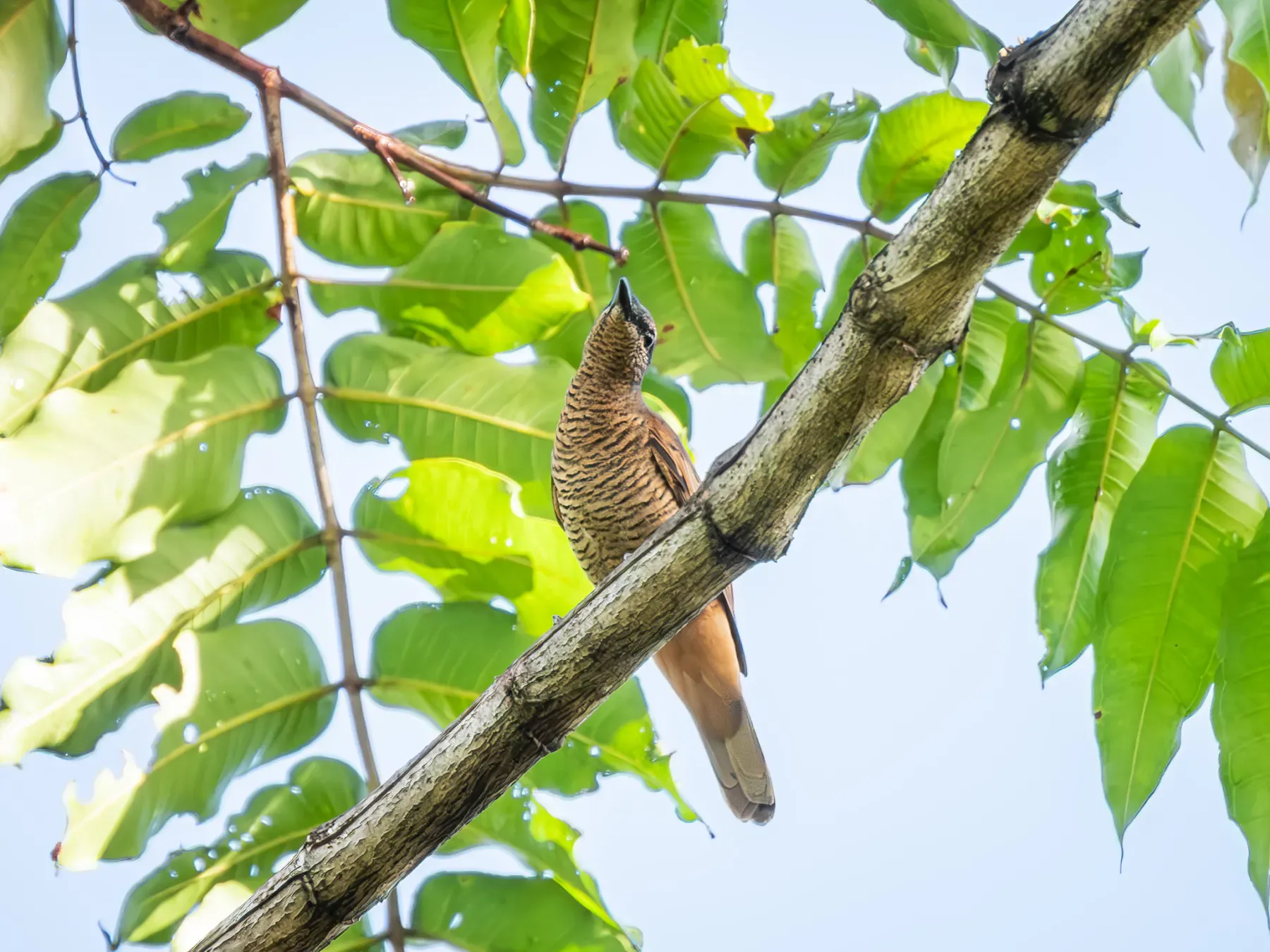
North Moluccan Cicadabird
North Moluccan Cicadabird
100
-
Points:
100
Not yet spotted on Fladder
Spotted
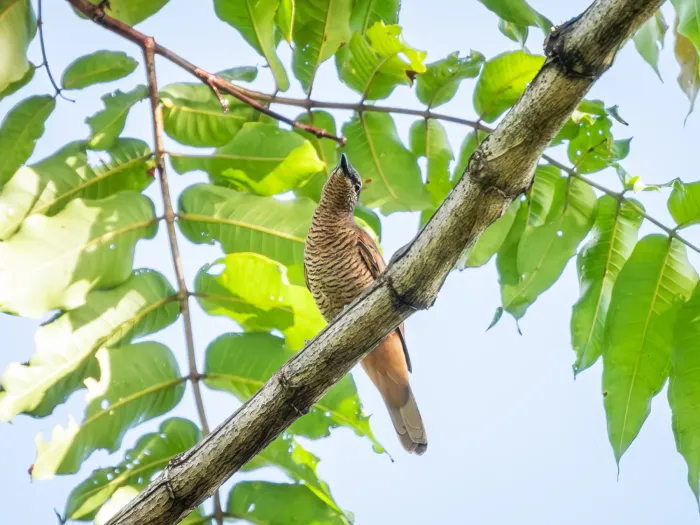
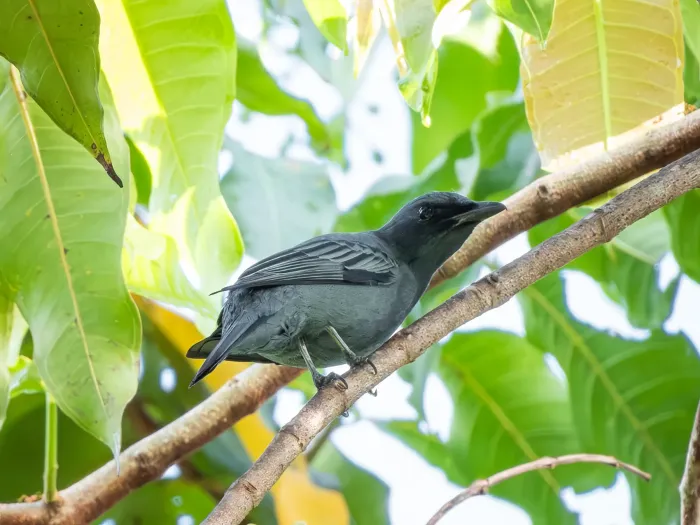
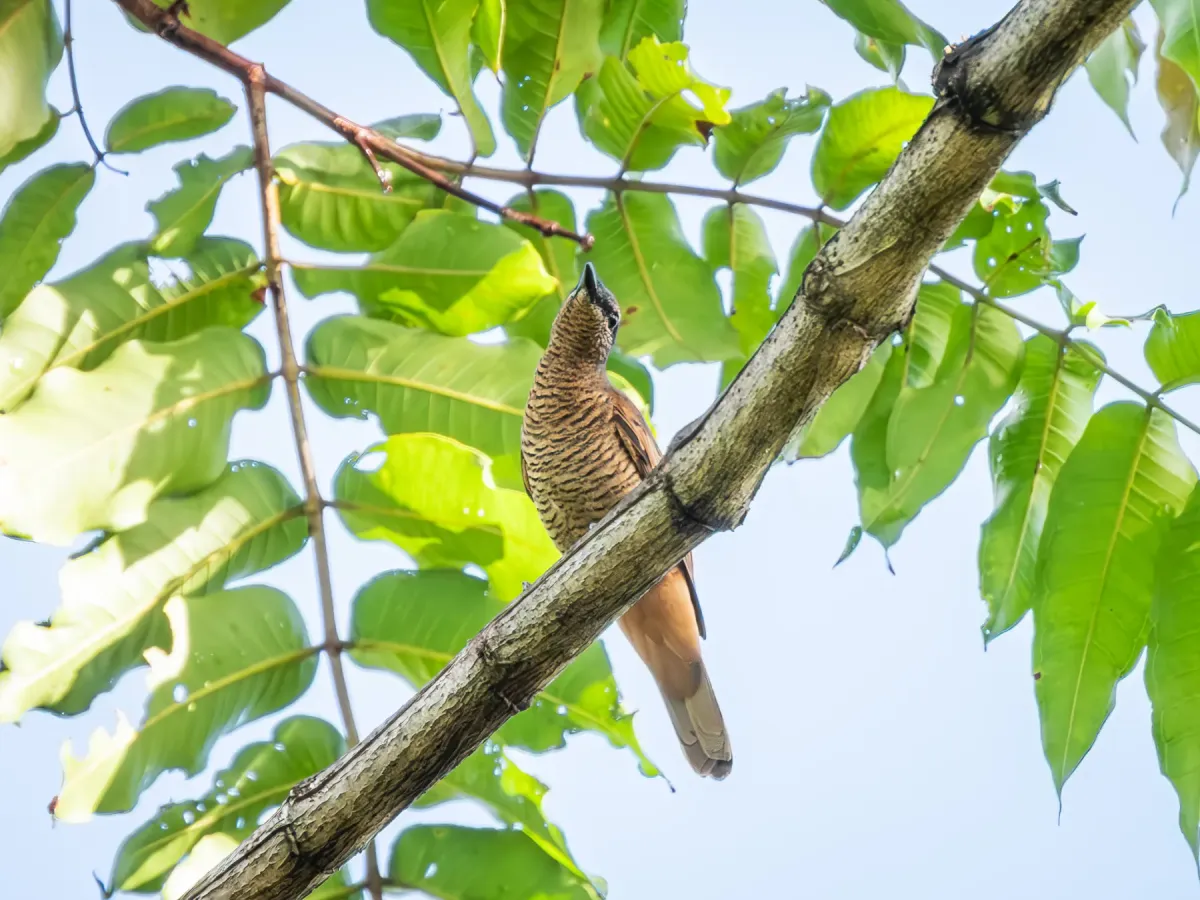
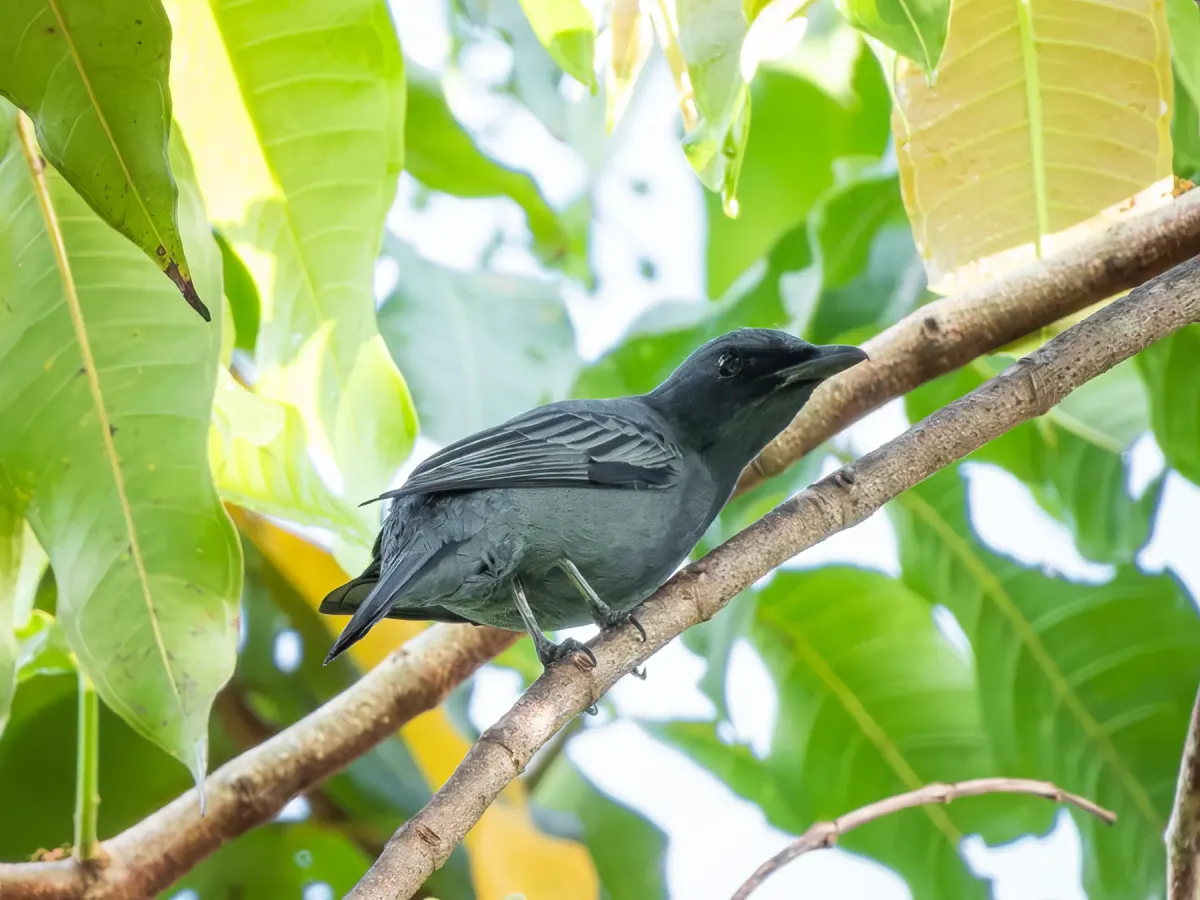
The Grey Cicadabird is characterized by its largely grey plumage, offering effective camouflage within the dappled light of its forest habitat. It is an insectivore, methodically searching for prey among leaves and branches.
Where to spot
Distributed across parts of Melanesia, including New Guinea and nearby islands. It inhabits lowland and hill forests, often found in the mid to upper canopy layers.
How to spot
Its grey plumage allows it to blend in well, so observe carefully for movement. Listen for its calls, which can vary but often include buzzing or trilling notes typical of cicadabirds.
When to spot
Active year-round in its tropical range. Observation opportunities are best during the early morning and late afternoon when the bird is most actively foraging.
Where to spot
Distributed across parts of Melanesia, including New Guinea and nearby islands. It inhabits lowland and hill forests, often found in the mid to upper canopy layers.
How to spot
Its grey plumage allows it to blend in well, so observe carefully for movement. Listen for its calls, which can vary but often include buzzing or trilling notes typical of cicadabirds.
When to spot
Active year-round in its tropical range. Observation opportunities are best during the early morning and late afternoon when the bird is most actively foraging.
Credits:
Wikimedia Commons
Credits:
Wikimedia Commons
The genus Edolisoma is part of the Campephagidae family, known for its members' often subtle plumage and arboreal, insectivorous habits.
Loading...
Spotted
No recently spotted birds
Monthly observations
No observations
Loading...
Nothing spotted yet
Also interesting



Share this page
Or share directly on
