Sahul Cicadabird
Sahul Cicadabird
100
-
Points:
100
Not yet spotted on Fladder
Spotted
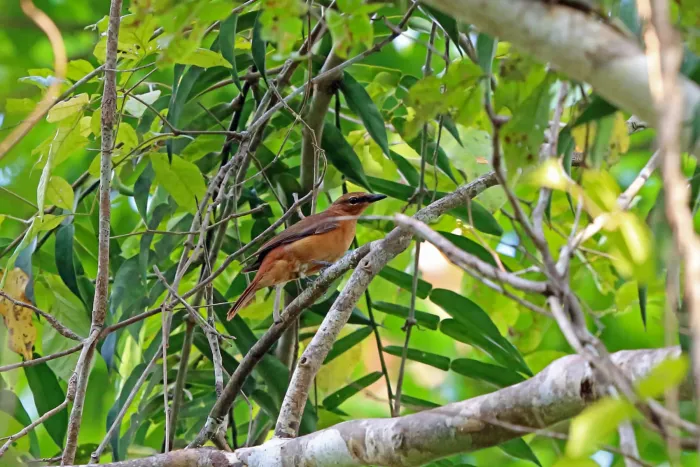
The Common Cicadabird, as its name suggests, is one of the more widespread and frequently encountered species within the cicadabird group. It is a medium-sized cuckooshrike recognized by its often dark or grey plumage and distinctive calls.
Where to spot
Widely distributed across Southeast Asia, Wallacea, New Guinea, and parts of Australia. It inhabits a variety of forested and wooded habitats, from dense rainforests to open woodlands, often in the canopy.
How to spot
Listen intently for its high-pitched, buzzing, or whirring calls, which are often the easiest way to detect it. Scan the mid to upper canopy of trees for movement, as its plumage can offer good camouflage.
When to spot
Active year-round in its resident tropical and subtropical ranges. Early mornings and late afternoons are generally the best times to observe this species when it is most vocal and active.
Where to spot
Widely distributed across Southeast Asia, Wallacea, New Guinea, and parts of Australia. It inhabits a variety of forested and wooded habitats, from dense rainforests to open woodlands, often in the canopy.
How to spot
Listen intently for its high-pitched, buzzing, or whirring calls, which are often the easiest way to detect it. Scan the mid to upper canopy of trees for movement, as its plumage can offer good camouflage.
When to spot
Active year-round in its resident tropical and subtropical ranges. Early mornings and late afternoons are generally the best times to observe this species when it is most vocal and active.
The 'cicada-like' calls of this bird, which give the group its common name, are a remarkable example of vocal mimicry or convergence in the bird world.
Loading...
Spotted
No recently spotted birds
Monthly observations
No observations
Loading...
Nothing spotted yet
Also interesting


Share this page
Or share directly on
