
Where to spot
Breeds across Europe and Western Asia, migrating to Africa for the non-breeding season. Inhabits tall grasslands, hay meadows, agricultural fields (especially traditional hayfields), and dense vegetation.
How to spot
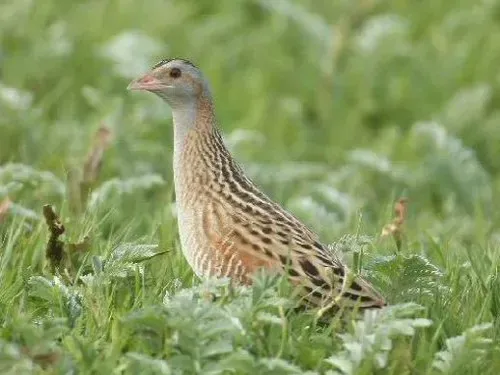
Identification is primarily by sound; listen for the loud, rasping, repetitive 'crex-crex' call. Spotting one requires immense patience and luck. Look for a small, brownish bird with barred flanks rapidly moving through dense grass. Focus on areas with tall, undisturbed vegetation.
When to spot
Primarily observable during the breeding season (late spring to mid-summer) when males are most vocal, particularly at dawn, dusk, and even through the night. Migration periods also offer chances.
Where to spot
Breeds across Europe and Western Asia, migrating to Africa for the non-breeding season. Inhabits tall grasslands, hay meadows, agricultural fields (especially traditional hayfields), and dense vegetation.
How to spot
Identification is primarily by sound; listen for the loud, rasping, repetitive 'crex-crex' call. Spotting one requires immense patience and luck. Look for a small, brownish bird with barred flanks rapidly moving through dense grass. Focus on areas with tall, undisturbed vegetation.
When to spot
Primarily observable during the breeding season (late spring to mid-summer) when males are most vocal, particularly at dawn, dusk, and even through the night. Migration periods also offer chances.


Credits:
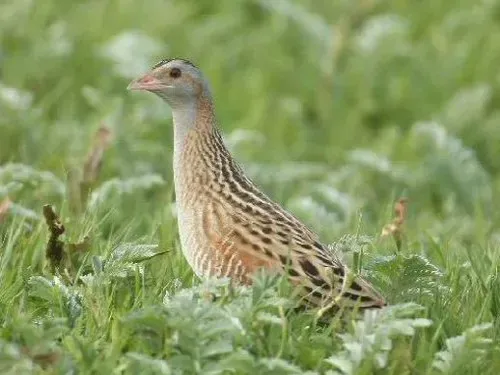
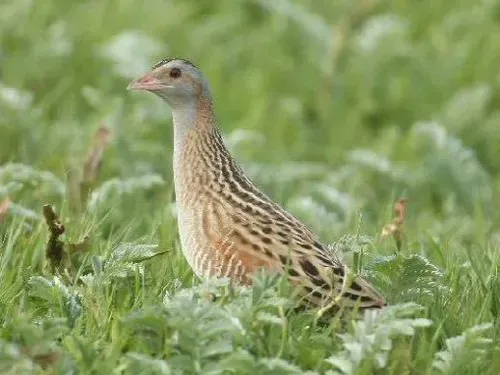
Door Ron Knight from Seaford, East Sussex, United Kingdom - Corn Crake (Crex crex), CC BY 2.0, https://commons.wikimedia.org/w/index.php?curid=46949915
Credits:
Wikimedia Commons
Despite its flight capabilities for long-distance migration, the Corn Crake prefers to run and hide rather than fly when disturbed, making it incredibly difficult to spot.






Also interesting



Share this page
Or share directly on
