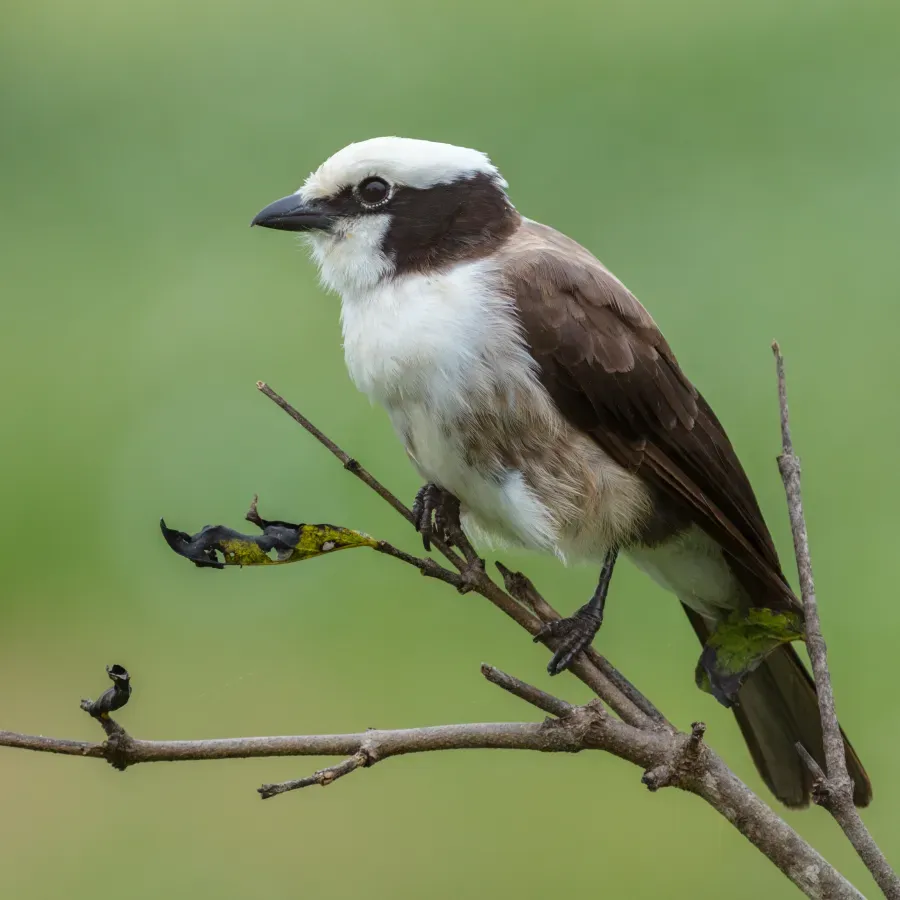
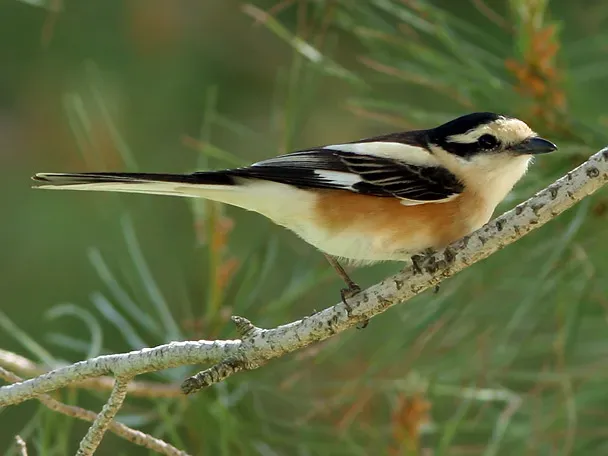
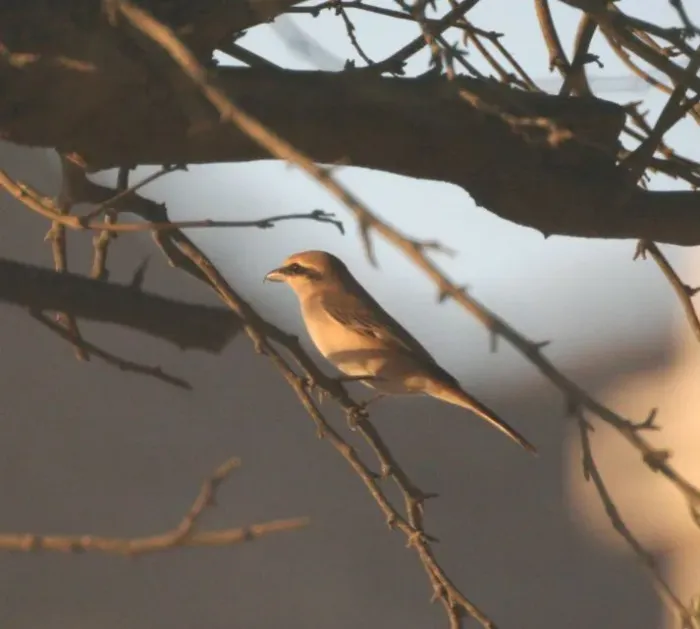
White-rumped Shrike
White-rumped Shrike
100
2 months ago
door
Henk Spuijbroek
Points:
100

The Northern White-crowned Shrike (Eurocephalus ruppelli) is a distinctive shrike species found in East Africa. It is easily recognized by its striking white crown, black mask, and contrasting black and white plumage. This highly social bird lives in cooperative groups and inhabits dry savannas and bushlands.
Where to spot
Found in East Africa, ranging from South Sudan and Ethiopia south through Uganda, Kenya, and northern Tanzania. It prefers arid and semi-arid savannas, acacia bushland, and dry scrub, often in groups.
How to spot
Look for groups of these strikingly patterned birds moving through the bush or perched conspicuously. The bright white crown, black mask, and mostly black body with white wing patches are unmistakable. Listen for their noisy, chattering calls and complex vocalizations.
When to spot
Resident throughout its range, observable year-round. They are active during the day, often seen foraging together in the mornings and late afternoons.
Where to spot
Found in East Africa, ranging from South Sudan and Ethiopia south through Uganda, Kenya, and northern Tanzania. It prefers arid and semi-arid savannas, acacia bushland, and dry scrub, often in groups.
How to spot
Look for groups of these strikingly patterned birds moving through the bush or perched conspicuously. The bright white crown, black mask, and mostly black body with white wing patches are unmistakable. Listen for their noisy, chattering calls and complex vocalizations.
When to spot
Resident throughout its range, observable year-round. They are active during the day, often seen foraging together in the mornings and late afternoons.


Credits:
Wikimedia Commons

Credits:
Wikimedia Commons

Credits:
Wikimedia Commons

Credits:
Wikimedia Commons
These shrikes are highly social and often seen foraging in small, noisy groups, communicating through a variety of chattering and whistling calls as they move through the savanna.
Loading...
Spotted
- Recently spotted
- 1 (Seen in the last 3 months)
- Last spotted
- 2 months ago door Henk Spuijbroek
Monthly observations
1 observation
Loading...
Also interesting






Share this page
Or share directly on
