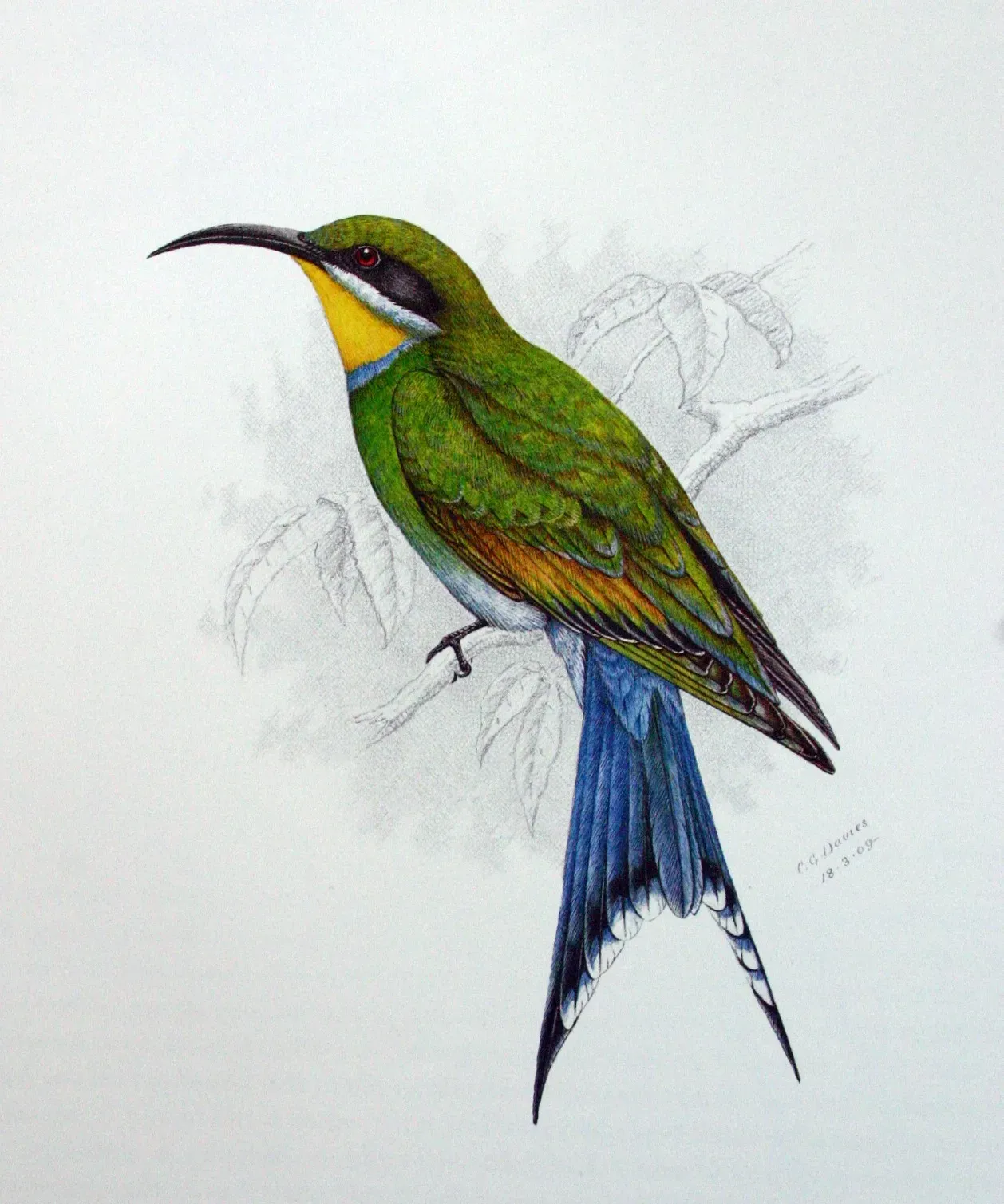
Swallow-tailed Bee-eater
Swallow-tailed Bee-eater
100
-
Points:
100
Not yet spotted on Fladder
Spotted
The Swallow-tailed Bee-eater is a distinctive member of its family, characterized by its deeply forked tail, a feature unique among bee-eaters. Its bright green plumage and yellow throat make it easily recognizable across its African range.
Where to spot
Widespread across sub-Saharan Africa, inhabiting a variety of open habitats including savannas, grasslands, woodlands, and thorny scrub, often near rivers or lakes.
How to spot
Look for its graceful, soaring flight and its habit of perching on exposed branches, telephone wires, or fence posts. Its sharp, liquid calls often draw attention before you spot the bird itself.
When to spot
Observable year-round in most of its range, though some populations undertake local migrations. Best seen during the day, particularly when insects are abundant.
Where to spot
Widespread across sub-Saharan Africa, inhabiting a variety of open habitats including savannas, grasslands, woodlands, and thorny scrub, often near rivers or lakes.
How to spot
Look for its graceful, soaring flight and its habit of perching on exposed branches, telephone wires, or fence posts. Its sharp, liquid calls often draw attention before you spot the bird itself.
When to spot
Observable year-round in most of its range, though some populations undertake local migrations. Best seen during the day, particularly when insects are abundant.


Credits:
Wikimedia Commons

Credits:
Wikimedia Commons

Credits:
Wikimedia Commons

Credits:
Wikimedia Commons

Credits:
Wikimedia Commons

Credits:
Wikimedia Commons

Credits:
Wikimedia Commons

Credits:
Wikimedia Commons
Its deeply forked tail, reminiscent of a swallow's, gives it exceptional aerial agility, allowing it to perform intricate maneuvers while hunting flying insects.
Loading...
Spotted
No recently spotted birds
Monthly observations
No observations
Loading...
Nothing spotted yet
Also interesting


Share this page
Or share directly on
