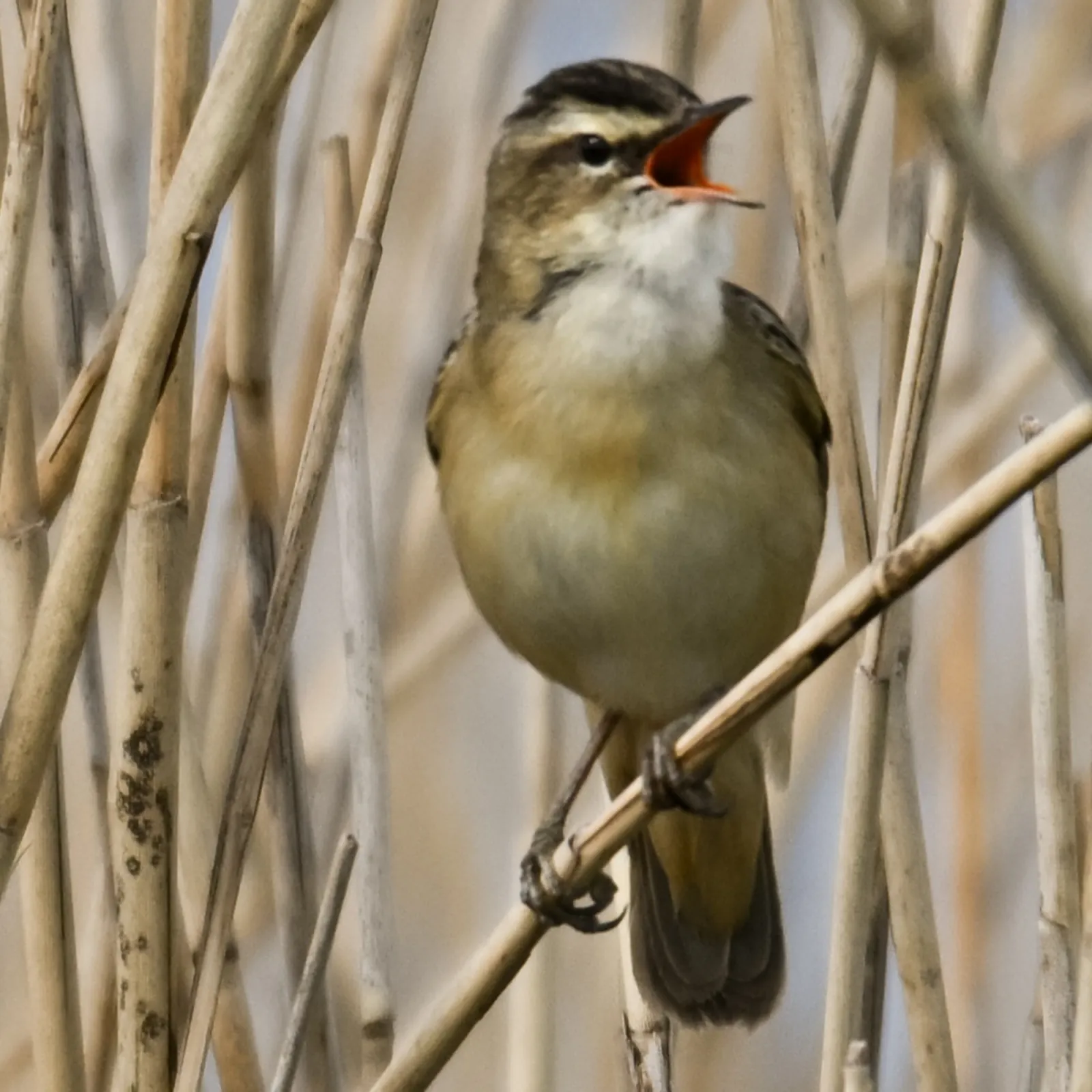
Sedge Warbler
Sedge Warbler
35
2 months ago
door
David CUTLER
Points:
35

J

+72
Spotted by






























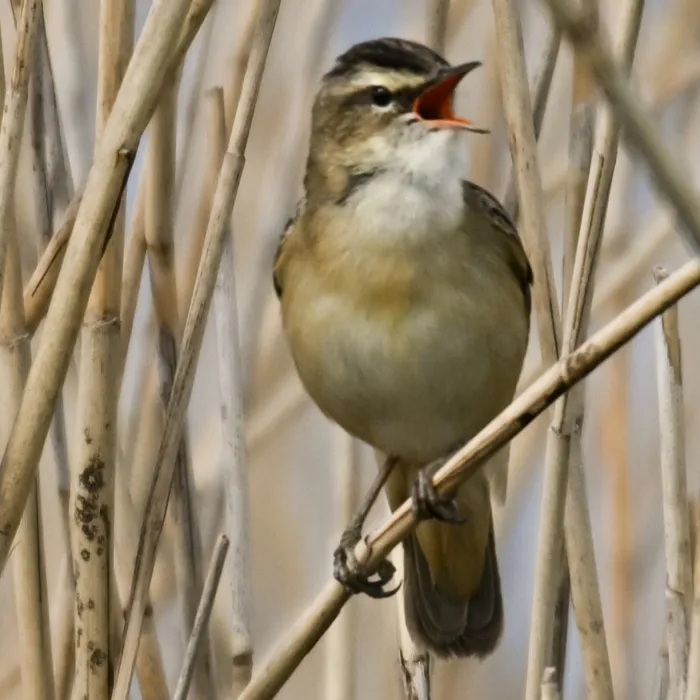
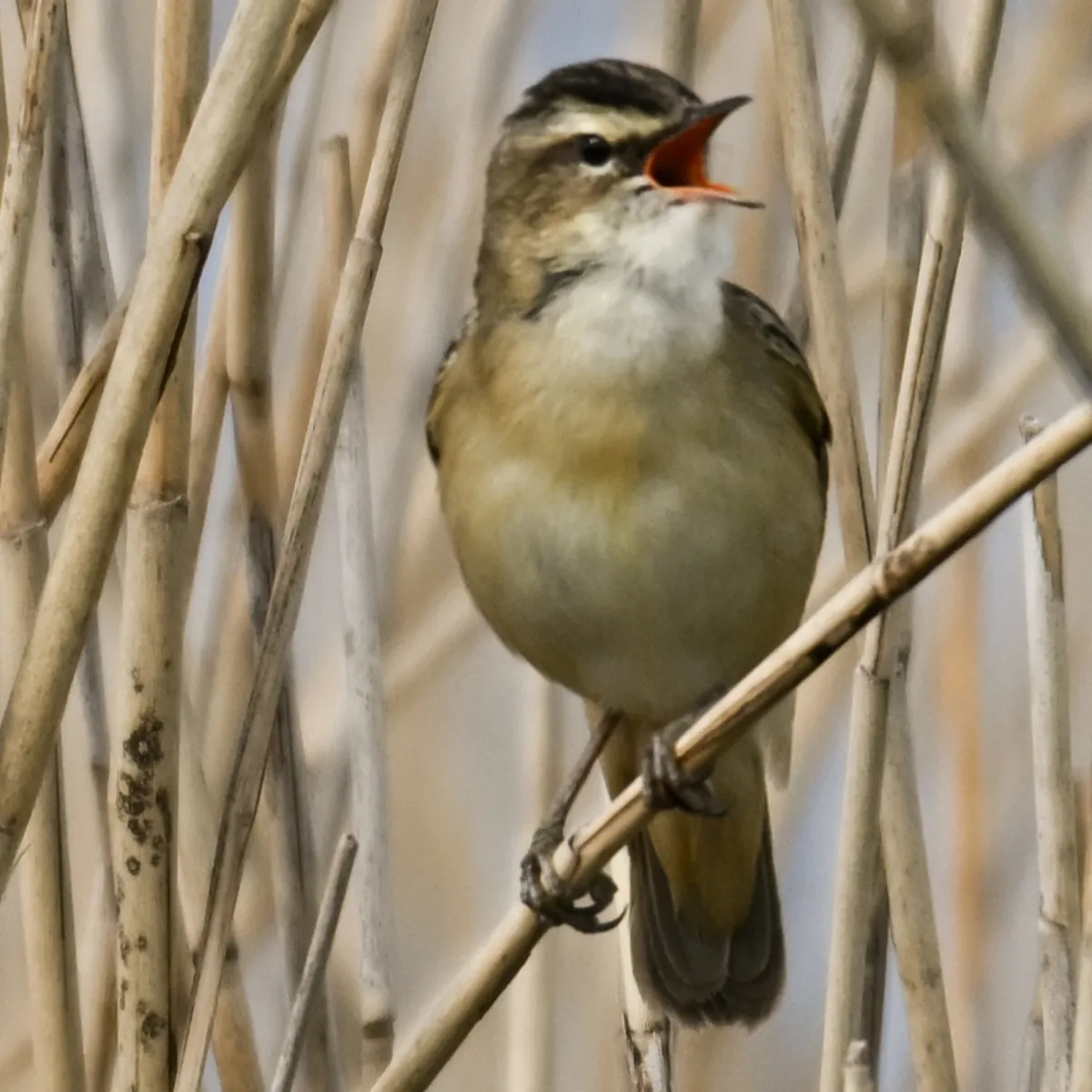
A common and widespread migratory warbler, the Sedge Warbler is easily recognized by its distinct streaked cap and energetic, complex song. It favors marshy habitats and wet scrub.
Where to spot
Breeds across most of Europe and temperate Asia in reedbeds, wet meadows, marshes, and damp scrub. Undertakes a long-distance migration to winter in sub-Saharan Africa.
How to spot
Look for its striking pale supercilium contrasting with a dark eye-stripe and a streaked crown. Its upperparts are streaky brown. Listen for its unique, fast, jumbled, and complex song, full of chattering notes, whistles, and mimicry, delivered with great energy.
When to spot
Best observed during the breeding season (April-July) when males are very vocal and conspicuous, often singing from exposed perches. Migrants can be seen passing through during spring (April-May) and autumn (August-September).
Where to spot
Breeds across most of Europe and temperate Asia in reedbeds, wet meadows, marshes, and damp scrub. Undertakes a long-distance migration to winter in sub-Saharan Africa.
How to spot
Look for its striking pale supercilium contrasting with a dark eye-stripe and a streaked crown. Its upperparts are streaky brown. Listen for its unique, fast, jumbled, and complex song, full of chattering notes, whistles, and mimicry, delivered with great energy.
When to spot
Best observed during the breeding season (April-July) when males are very vocal and conspicuous, often singing from exposed perches. Migrants can be seen passing through during spring (April-May) and autumn (August-September).



Credits:
Arend Vermazeren

Credits:
Arend Vermazeren

Credits:
Arend Vermazeren

Credits:
Arend Vermazeren

Credits:
Arend Vermazeren

Credits:
Guy L Janssens

Credits:
paral_lax <°)><

Credits:
Ouwesok

Credits:
bjornlammers
Credits:
jenny van Dorland
The Sedge Warbler is a remarkable mimic, often incorporating the calls and songs of many other bird species into its own rapid, chattering song. Due to this extensive mimicry, no two Sedge Warbler songs are exactly alike.
Loading...
Spotted
- Recently spotted
- 5 (Seen in the last 3 months)
- Last spotted
- 2 months ago door David CUTLER
Monthly observations
187 observations
Loading...









Also interesting




Share this page
Or share directly on
