










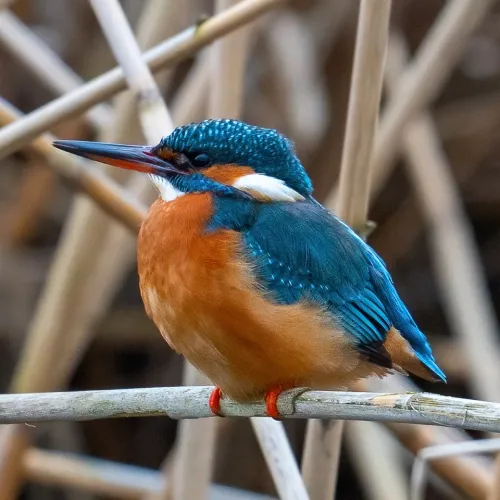







Where to spot
Breeds across Europe, often inland near freshwater bodies, and winters extensively along European coasts, the Mediterranean, and parts of North Africa. Increasing numbers are observed elsewhere as vagrants.
How to spot
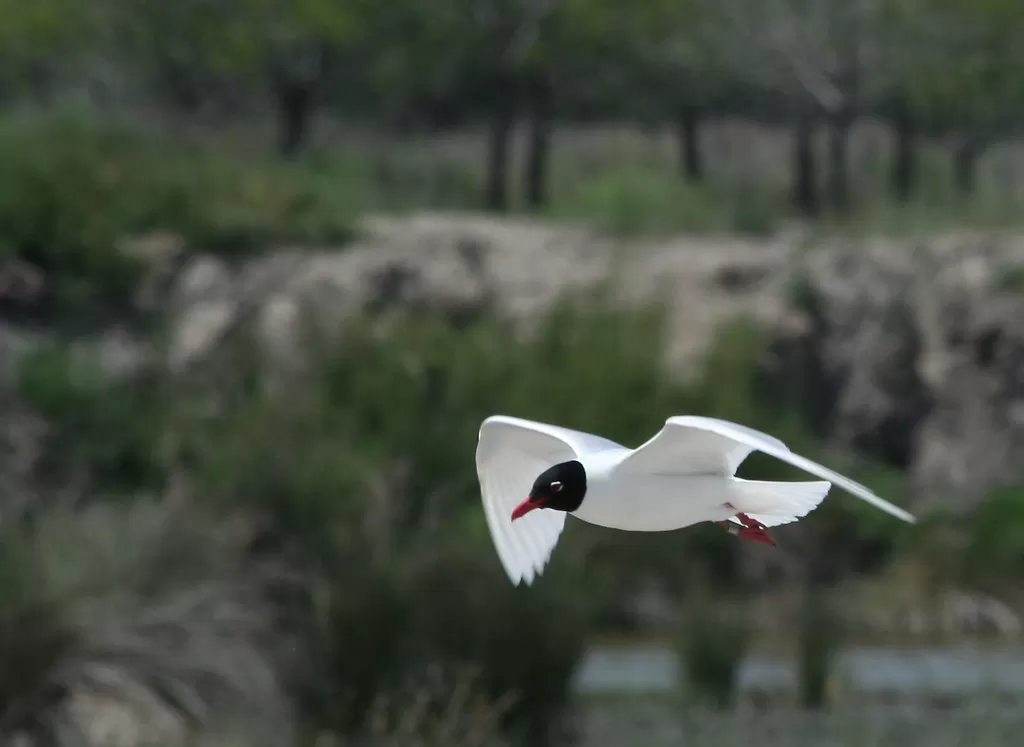
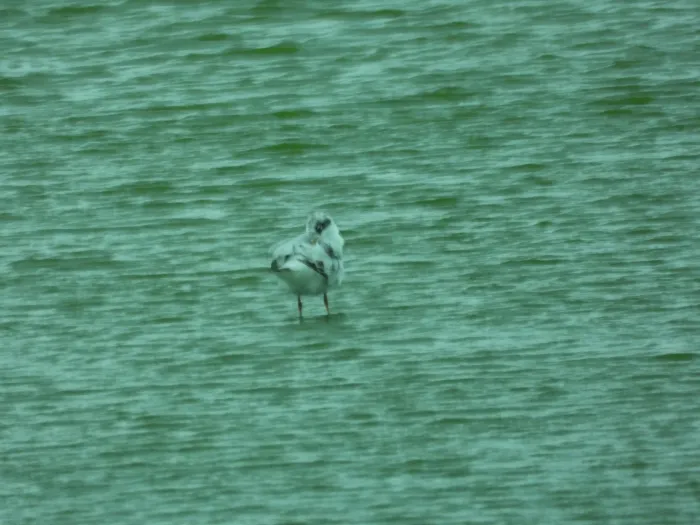
In breeding plumage, identify by the jet-black hood and broad, unmarked white wingtips. In non-breeding, look for a clean white head with a distinct dark ear spot and a broader black bill, often with a reddish base.
When to spot
Can be observed year-round in many parts of its extended range. Breeding season is from spring to early summer.
Where to spot
Breeds across Europe, often inland near freshwater bodies, and winters extensively along European coasts, the Mediterranean, and parts of North Africa. Increasing numbers are observed elsewhere as vagrants.
How to spot
In breeding plumage, identify by the jet-black hood and broad, unmarked white wingtips. In non-breeding, look for a clean white head with a distinct dark ear spot and a broader black bill, often with a reddish base.
When to spot
Can be observed year-round in many parts of its extended range. Breeding season is from spring to early summer.


Credits:
Freddie H.

Credits:
hans zwitzer
The Mediterranean Gull's pure black head and very pale underwings distinguish it strongly from the similar-looking Black-headed Gull, which has a chocolate-brown head and dark underwing tips.
Loading...
Spotted
- Recently spotted
- 4 (Seen in the last 3 months)
- Last spotted
- 1 month ago door Patricia
Monthly observations
75 observations
Loading...










Also interesting





Share this page
Or share directly on
